Cycling from Braga in Portugal to Santiago de Compostela in Spain
-
If you click a link with an * and buy from a company’s website, I may receive a small payment. This helps fund the Outdoor Girl site and keeps it free to use with no annoying pop up adverts.
But there are a couple of crucial things you need to know about this:
It never impacts my content or recommendations – if I include something, I genuinely think will be helpful
There is no extra cost to you when buying via one of these links
For a more detailed explanation, see my policy on affiliate links, including Amazon Associate links.
For transparency, you can also find duplicate links below that don’t help fund the Outdoor Girl website.
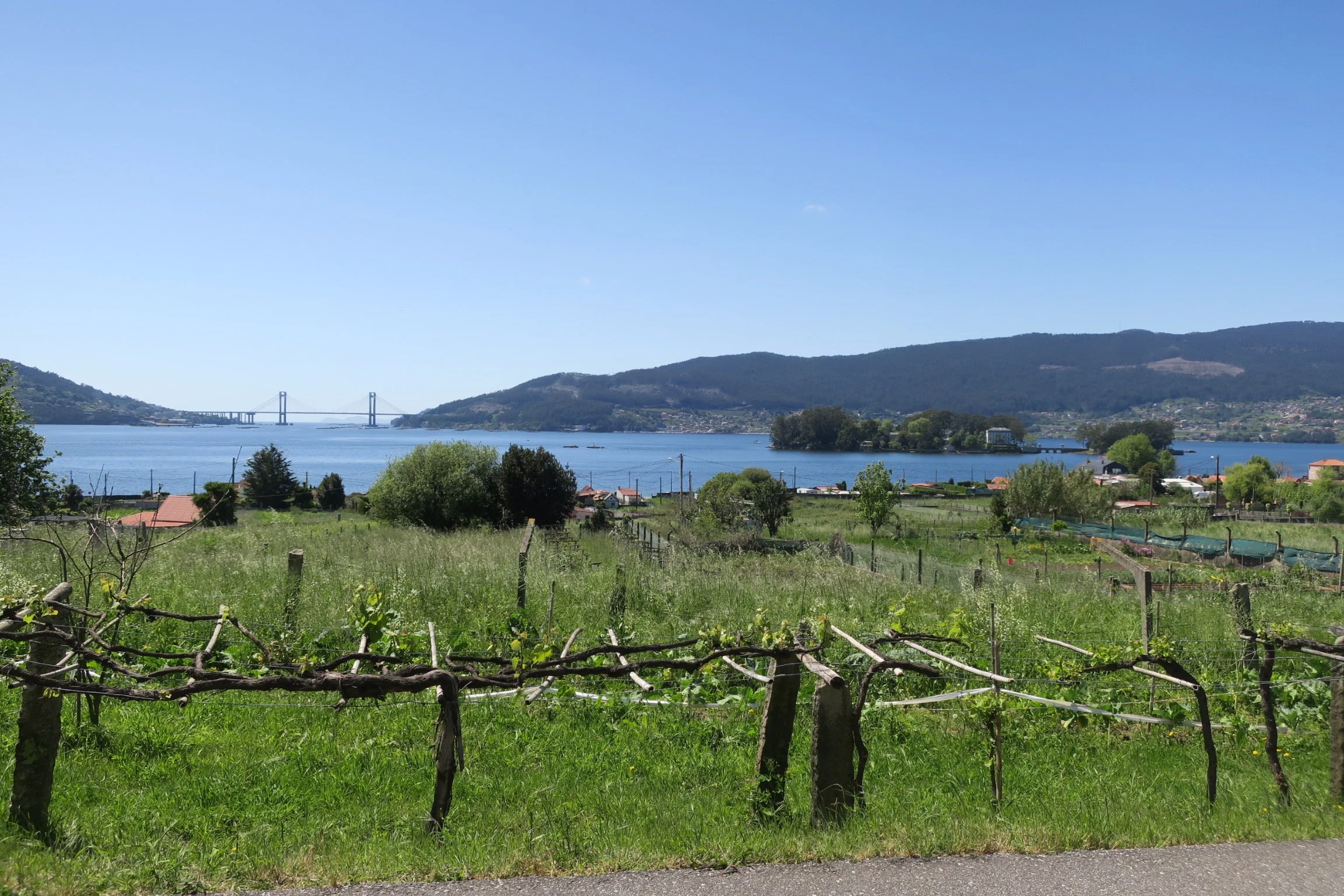
Rías Baixas, Galicia
Living in the UK, surrounded by water, we don’t get to cycle across country borders (unless it’s between Scotland, England, and Wales). Visiting another European country means showing our passports and boarding a ferry, train, or plane. I always remember the first time driving across the border into Germany. We simply passed an EU border sign and seamlessly transitioned from a Dutch motorway to the German Autobahn.
So, when we cycled from Braga in Northern Portugal and across the River Minho into Spain, it felt like an extra special part of our bike trip to Santiago de Compostela. It marked the first time I’d ever crossed a country border under my own steam.
Braga, the city of bells
Our journey began in Braga, one of Portugal’s oldest cities. It’s easily reached from Porto by train or car and I immediately fell in love with the friendly, vibrant city centre. The cathedral here was built back in the 12th century and there are churches dotted around every corner. Bells chime out across the city, especially on the hour, earning Braga the nickname city of bells.
The city centre has a relaxed feel and is less touristy than Porto. We wandered around the cobbled streets, admiring the architecture and azulejo tiled buildings. But one of my favourite places was the flower-filled Jardim do Santa Bárbara, where we escaped the bustle for a while.
A Brasileira is Braga’s famous cafe, established in 1907 and renowned for it’s art nouveau style. It has a great reputation, but we prefer to discover the lesser-known places tucked away on side streets. We stumbled across the perfect pastelaria and lingered over coffee (ok, tea and beer) before heading back to our hotel, passing a square filled with locals playing music, dancing, and chatting.
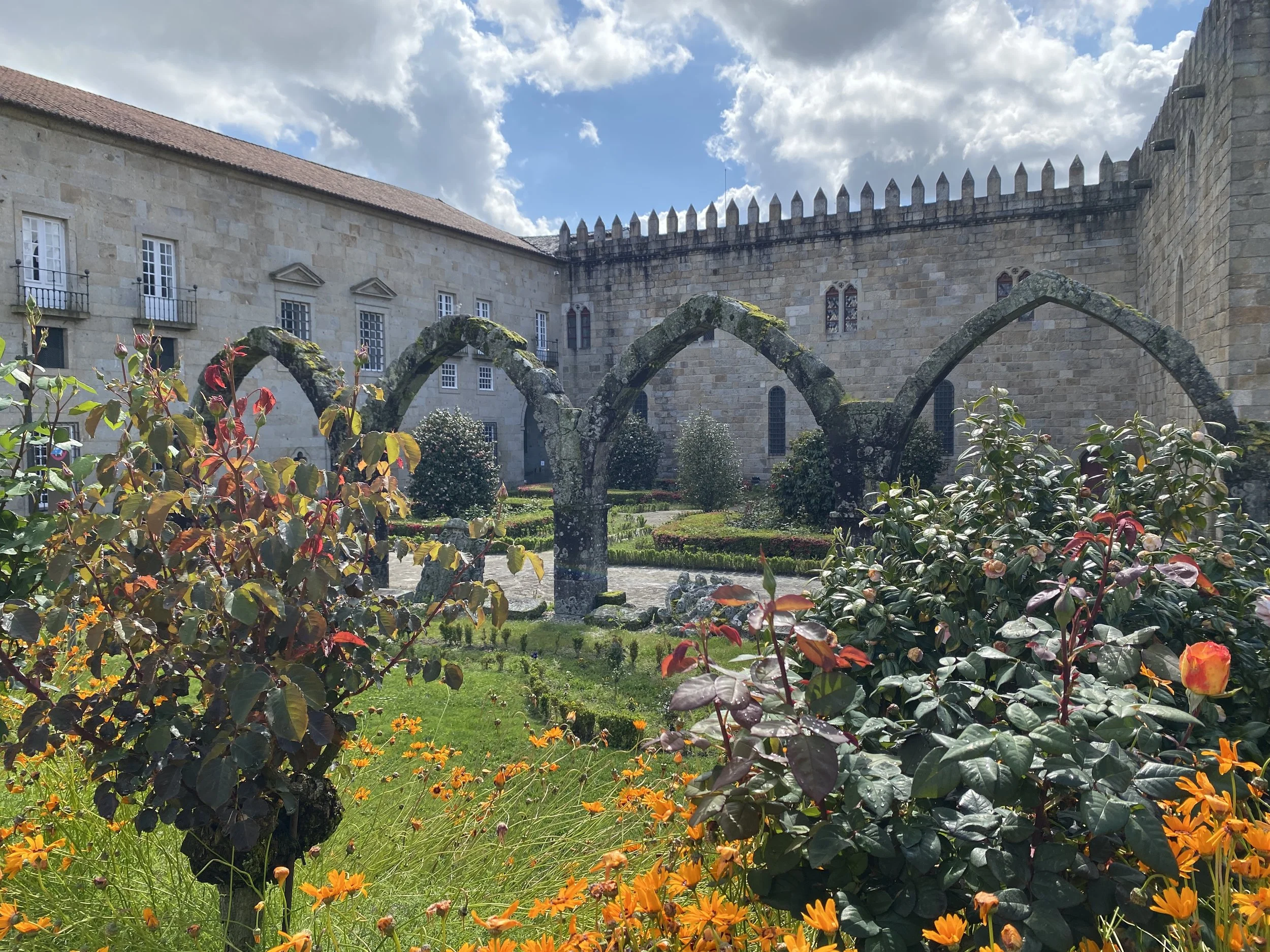
Jardim do Santa Bárbara, Braga
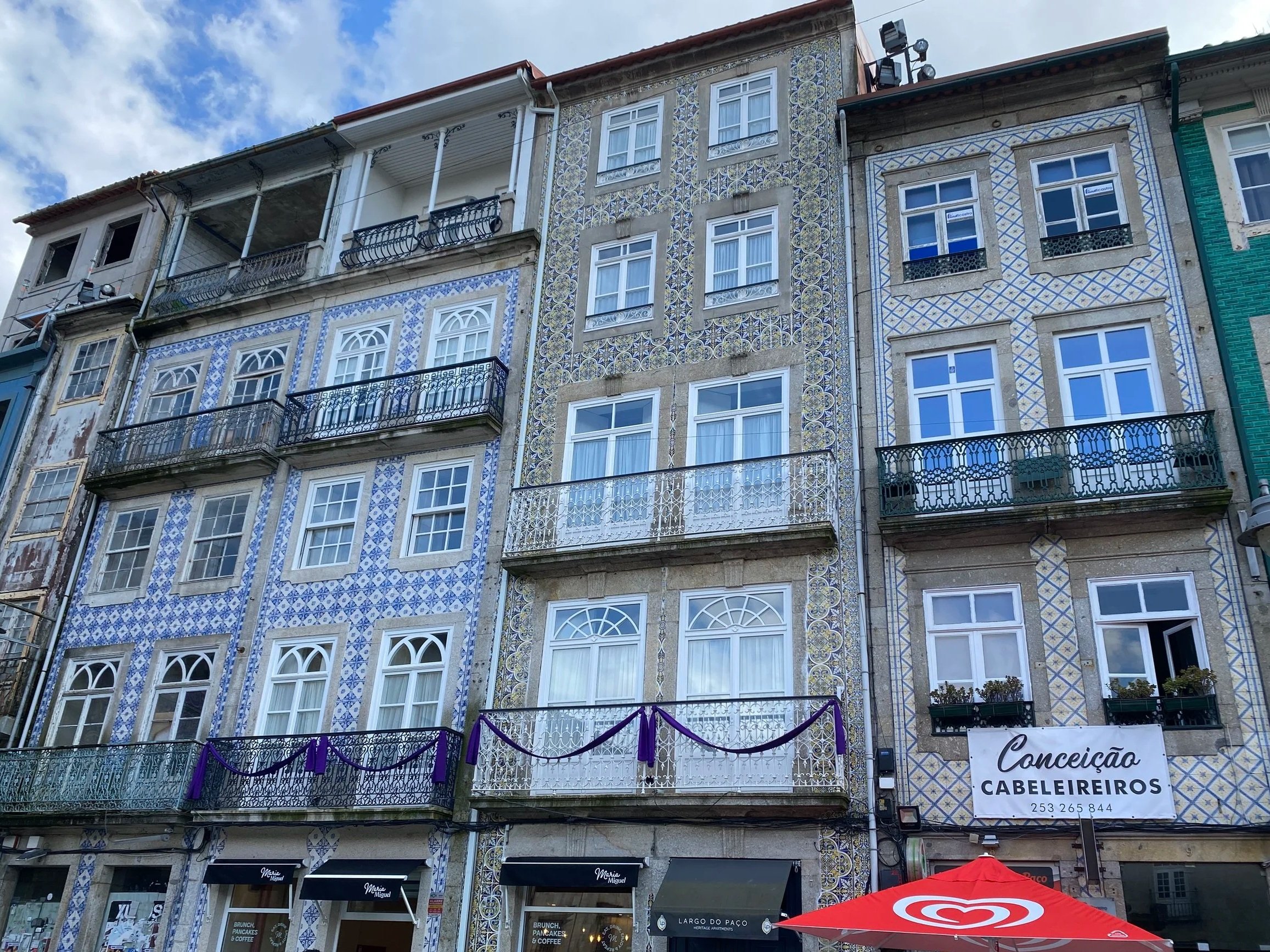
Azulejo tiles, Braga
Cycling through Northern Portugal’s Minho region
The following morning, we collected our bikes, dropped our luggage for transfer, and began pedalling out of Braga. We usually cycle on regular bikes at home, but had e-bikes this time round which made easier work of the two big hills we’d encounter on our journey to Valença.
Soon out of the city streets, we found ourselves following sections of the Camino Minoto Ribiero, one of several pilgrimage routes leading to Santiago de Compostela. By the end of the trip, we’d have encountered sections of two more.
The Green Minho
As we rolled through the Minho countryside, it became clear why this area of Portugal is known for its lush, green landscape. We passed sheep grazing in fields, lemon trees laden with fruit, and rows of Alvarinho vines.
The vines here are different to those in other vineyards I’ve seen, growing high on pergolas to allow air circulation in the higher humidity climate. Often, we’d pass by smallholdings with vines giving shade for vegetables or sheep underneath, making the most out of the land available.
One of my favourite places was the pretty town of Arcos de Valdevez, which serves as a gateway to the Peneda-Gerês National Park. The Vez river runs through and you can wander alongside it on wooden boardwalks. But it was the historic centre that showed us just how quirky this town is.
A big Water Clock marks the passing hours through fountains, and there’s a huge cow sculpture made out of rubbish. I also had a double take at the jousting knights, known locally as the Horses without Legs - apparently, they commemorate a medieval jousting event that took place in the river, meaning you couldn’t see the horses legs!
Leaving Arcos, we followed a quiet road above the Vez River before dropping down to cross it via a pedestrianised medieval bridge. From there, our route wound through more vineyards before climbing steeply over a hill and dropping into Ponte da Barca.
Named after the boats (barca) that once ferried people across the River Lima, Ponte da Barca is a pretty, bustling town. We didn’t have time to explore, but I’d love to return and soak up the cafe culture here.
Our final kilometres towards Valença followed the Ecopista do Minho, a disused railway line running alongside the River Minho. It was easy rolling as we passed the old station buildings and caught glimpses of Spain across the water.
Valença old town is surrounded by fortified walls and its cobbled streets are lined with shops selling traditional household textiles - so well known that people travel from Spain to shop here. We spent our final night in Portugal overlooking the Minho, enjoying incredible views of Spain.
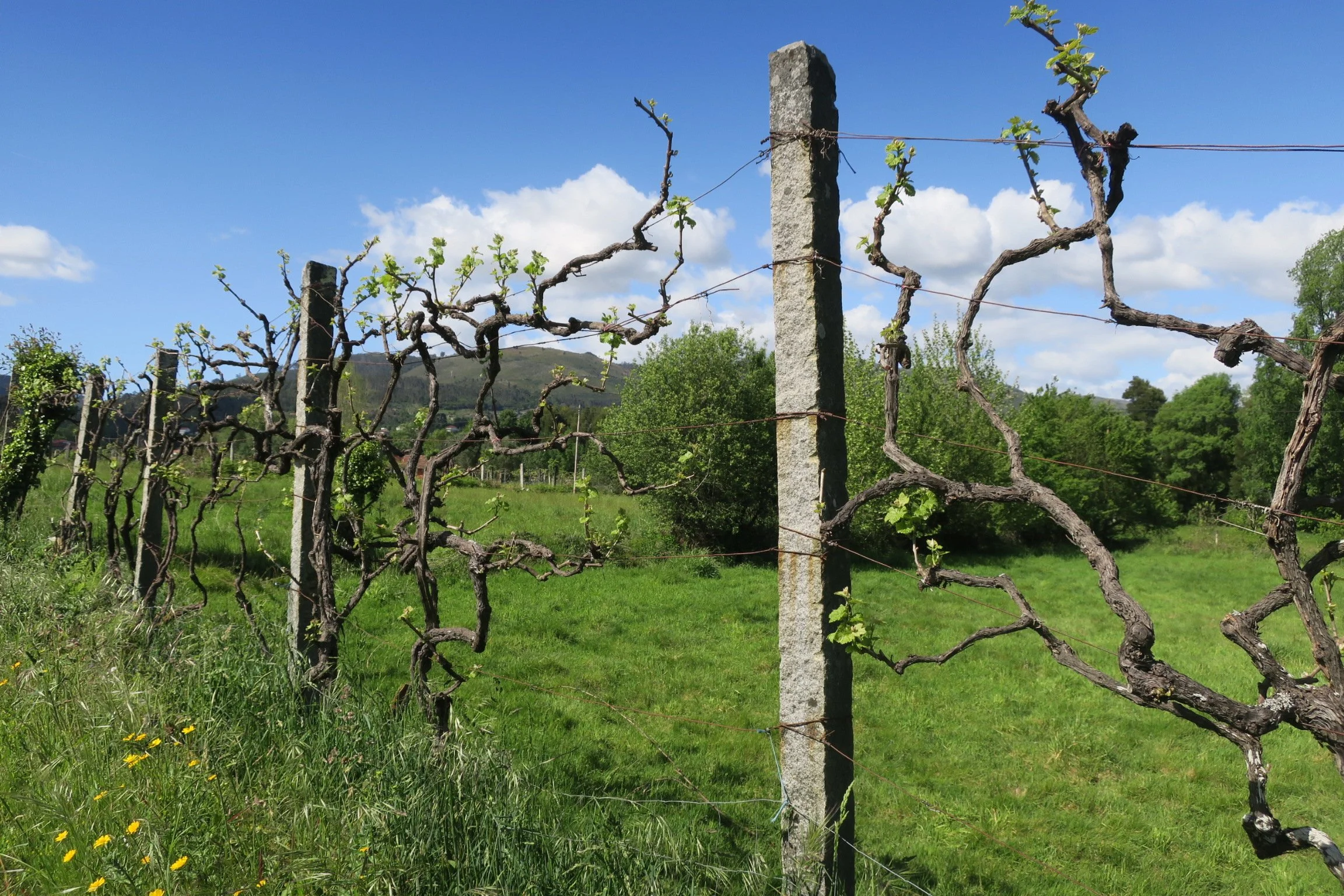
Alvarinho vines, Minho region - northern Portugal
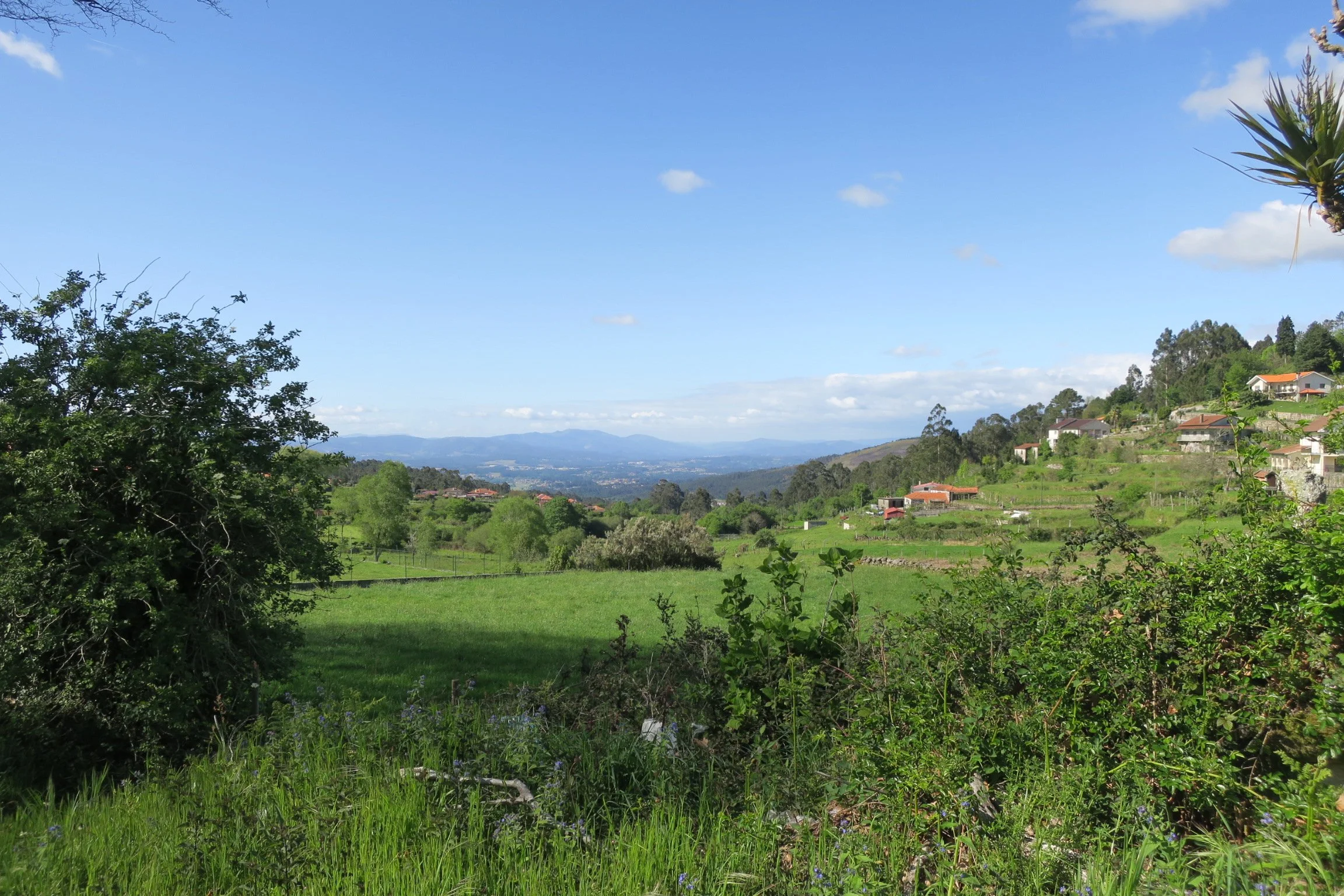
Looking towards Spain from Portugal’s Minho region
Pedalling across the border to Spain
The day began with a first for me as we pedalled out of Valença and crossed the River Minho into Spain. It was a busy road, but thankfully had a small area by the EU border sign for us to pull in and take a picture!
From there, we headed towards Tui and it’s formidable 12th century cathedral, before a quick cafe stop around the corner at Ideas Peregrinas.
Now following sections of the main Camino Portuguese, the atmosphere was noticeably different. As we passed walkers, we were met with cheerful shouts of Bom Caminho (literally translated as good way). I wondered whether it should be Buen Camino now we were in Spain, but I guess this was still the Portuguese route. Cycling through the woods beyond Tui, a lone piper stood playing traditional Galician bagpipes, another sign that this was a pilgrimage route
Lunch was at the fabulous O Alpenòre, a popular stopping off point for pilgrims, before we tackled the final kilometres into Pontevedre. The scenery opened up and we caught our first glimpse of the Rías Baixas. These fjord-like inlets are hugely popular with Spanish and Portuguese holidaymakers and known for some of the best seafood in Spain. It’s also home to the world-renowned Albariño wine.
Pontevedra is a big city but surprisingly easy and enjoyable to walk around. The historic centre is pedestrianised and there’s a strong Camino culture here. It had a lively and welcoming atmosphere, with amazing tapas bars, and I’d happily return to explore more one day.
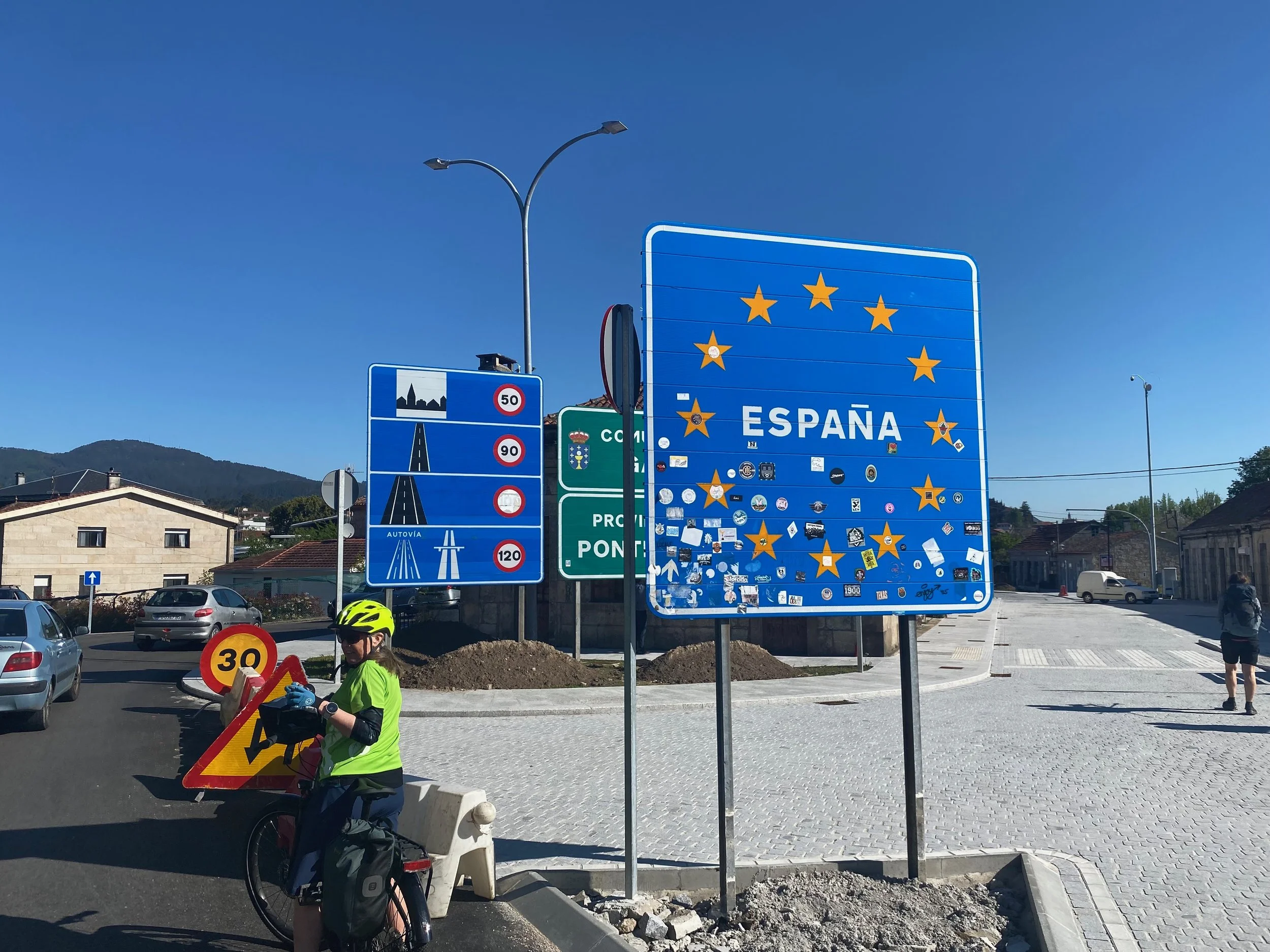
Cycling across the border into Spain
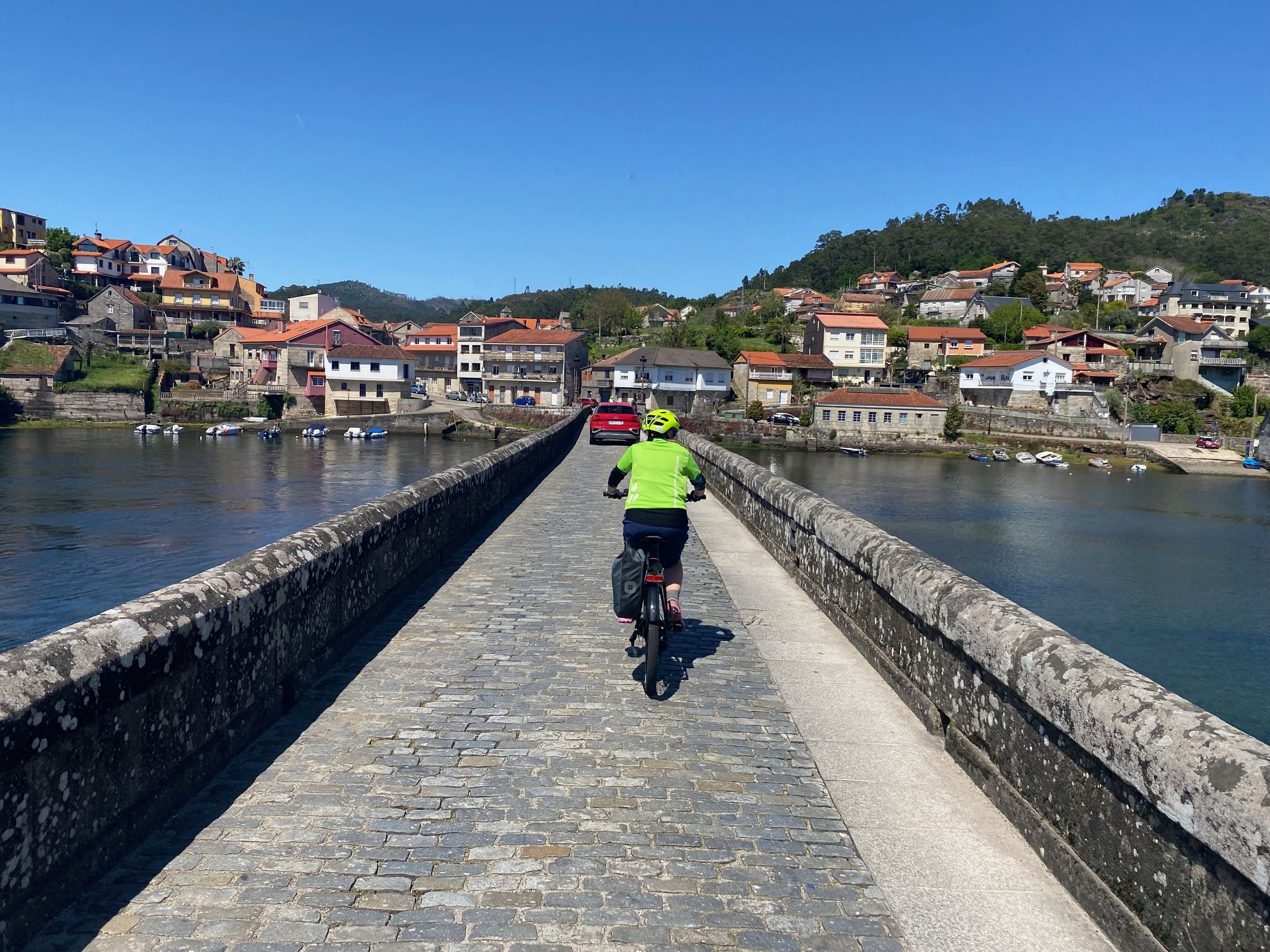
Ponte Sampaio where Spanish forces defeated Napolean’s army in 1809
Cycling along Galicia’s Rías Baixas coastline
Leaving Pontevedra, we followed sections of the Spiritual Variant of the Camino Portuguese. This lesser-known route keeps to quieter paths and includes a boat journey (more later) before reaching Santiago de Compostela.
The scenery was stunning as we hugged the Rías Baixas coastline, through the beautiful village of Combarro and onto the seaside resorts of Sanxenxo and Portonovo. But the real highlight for me was pedalling onto the small peninsula of O Grove, reached by a narrow isthmus, and crossing a 2km long bridge to the Illa de Arousa.
O Grove is a wonderful seaside town with amazing restaurants. It’s also an important area for migrating birds and we passed several bird hides along the isthmus.
Illa da Arousa, on the other hand, is a small island, reached by a big bridge! It has a protected natural area and the beaches are beautiful, making it feel a wonderfully unspoilt place.
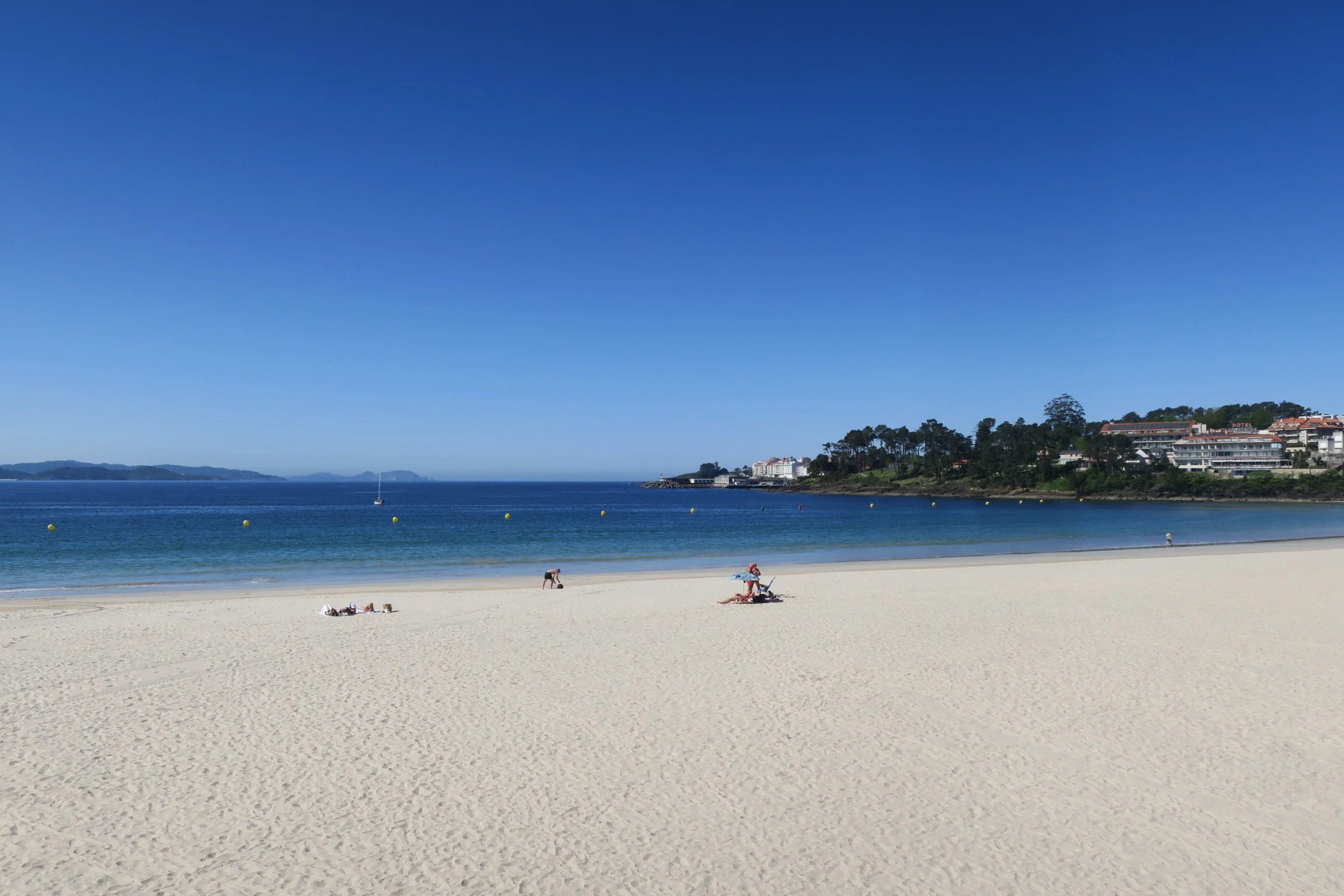
Rías Baixas sandy beaches
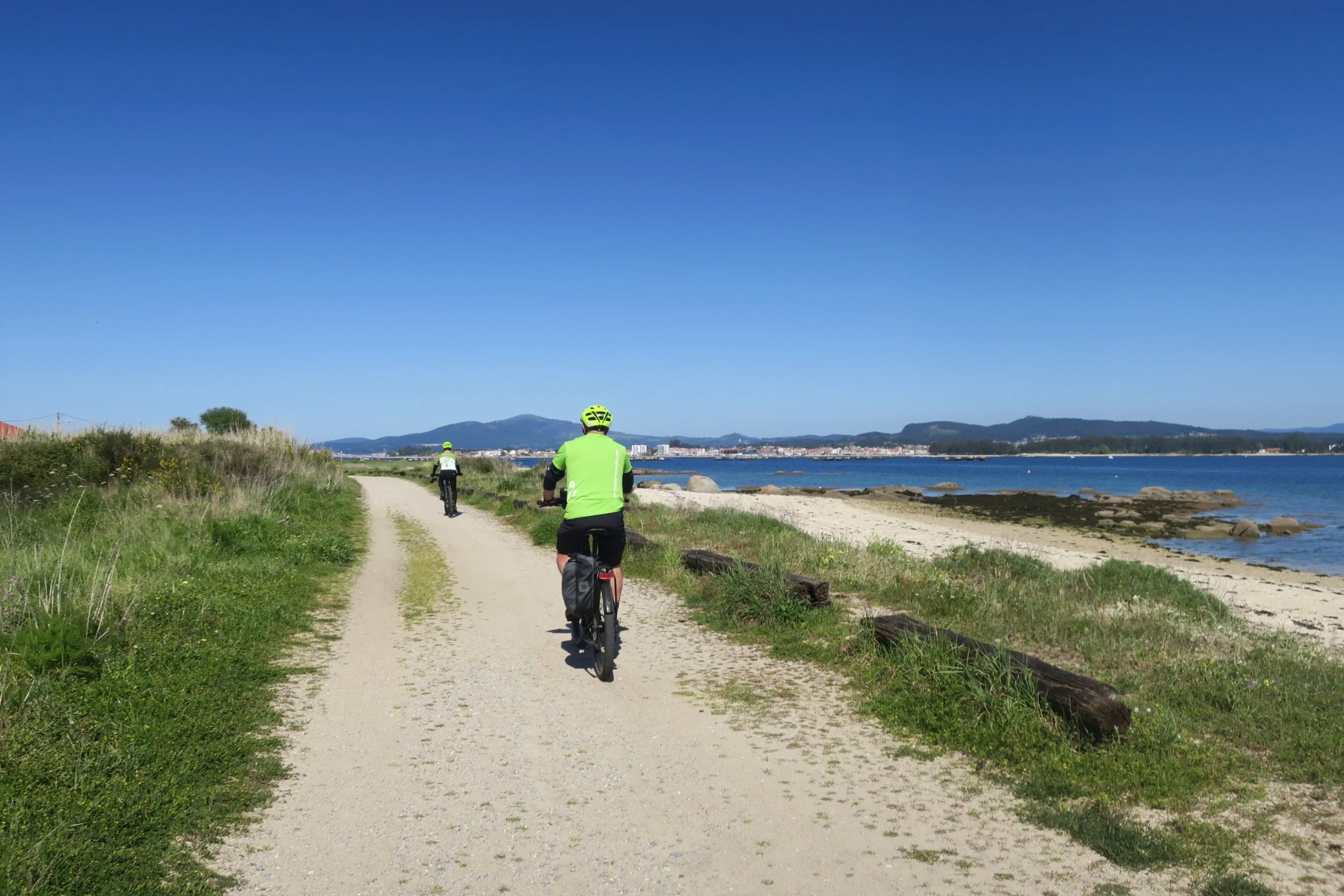
Cycling on the Illa da Arousa
The final kilometres to Santiago
Leaving Vilagarcia de Arousa, the next stage of our journey was by water. Boarding a boat with our bikes, we headed 27km up the Ulla River. Known as the Traslatio, this route is part of the Spiritual Variant of the Camino, retracing the legendary maritime journey of St James’s remains to Santiago.
The boat sailed past thousands of bateas, the floating mussel rafts that are so famous in this area. If you’re lucky, the captain will stop near fishermen working a raft so you can see how it’s done.
Leaving the boat at Pontecesures, we cycled the final kilometres to Santiago. Now back on the main Camino Portuguese, we rode alongside walkers in high spirits as they took their last steps towards the cathedral. The atmosphere was almost carnival-like and we were firmly into the Bom Caminho spirit now.
Our final approach to the cathedral was chaotic! The narrow streets were packed with tourists and I had to get off and push my bike. But rounding a corner and seeing the iconic Cathedral of Santiago de Compostela right in front of us made it all worthwhile.
If you’re curious about doing a similar trip, there’s an enquiry form* on my website and I can pass your details onto the company we travelled with.
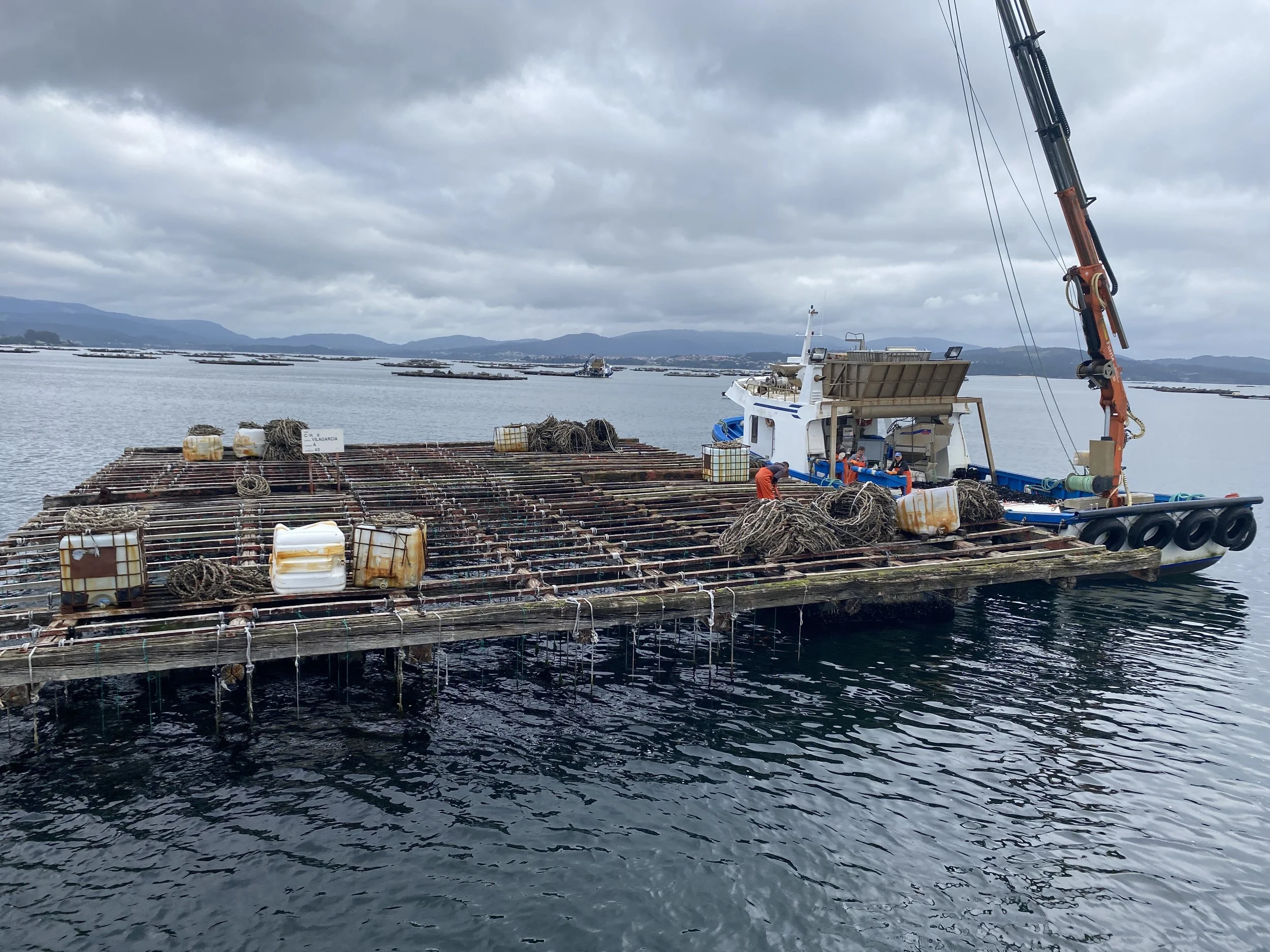
Fishermen working on the bateas
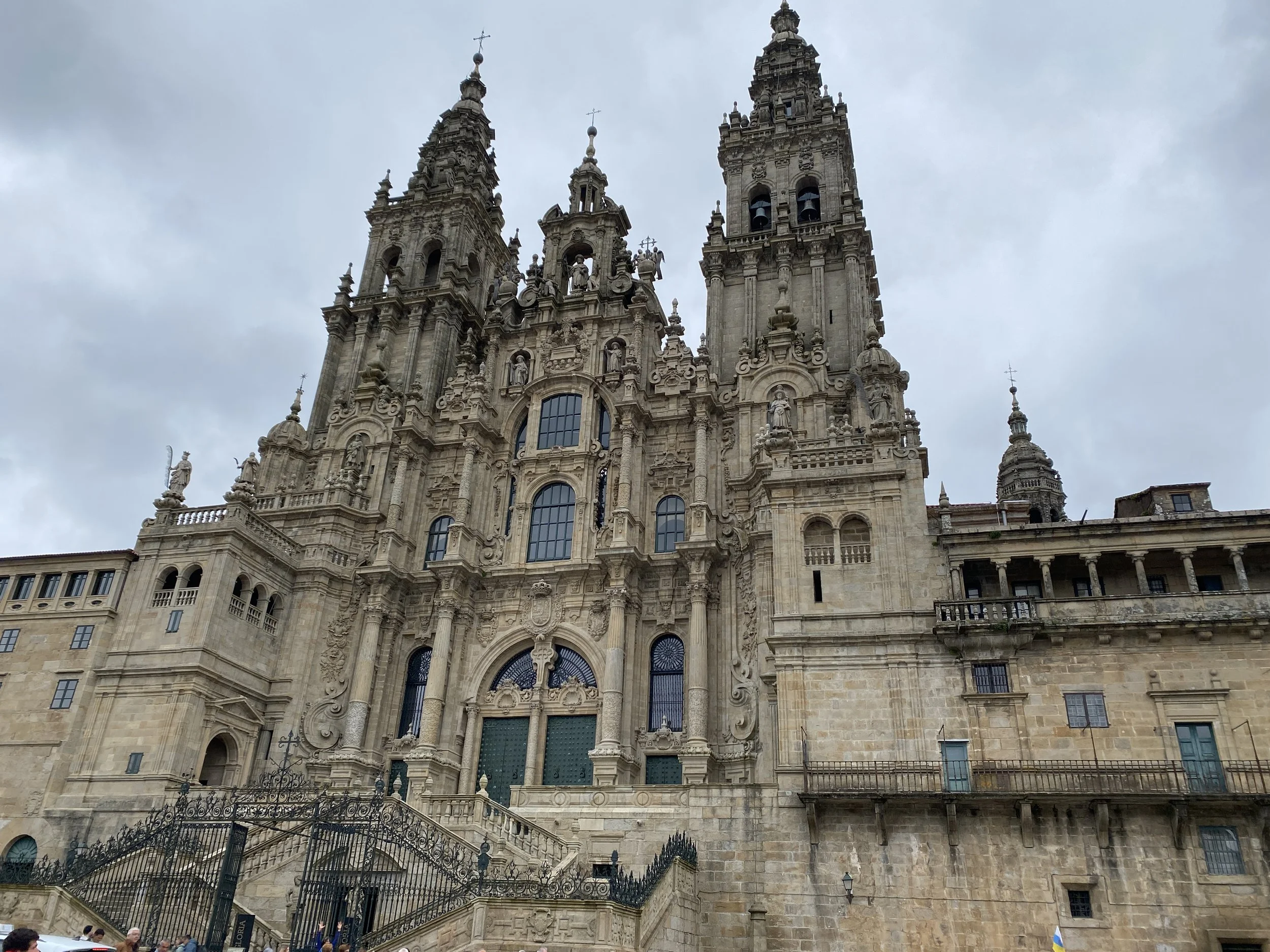
Santiago de Compostela’s cathedral
I’d known about the Camino de Santiago for years, with the route crossing from France, through northern Spain to Santiago. What I hadn’t realised was how many more pilgrimage routes there are to Santiago, criss-crossing France, Spain, and Portugal.
In the back of my mind, I’d often wondered about walking the Camino from France to stand in front of the iconic cathedral. I may not have walked to Santiago, but cycling from Northern Portugal to stand in the same square feels pretty amazing.
The route we followed was jam-packed with interest. From medieval towns and the green Minho countryside, to the Rías Baixas coastline and Galician food and wine. But, for me, travel is always about the people I meet. The pilgrims we shared the trail with, and the welcomes received from as we travelled through towns and villages.
I fell in love with Northern Portugal when we cycled in the Douro valley the previous year. This trip only made me love it more - and added Galicia to the list.
Note: This trip was part of a content writing project for a client, but everything shared here reflects my own personal experience and honest impressions.
You may also be interested in reading:
Cycling in the wild mountains of Peneda-Gerês and Xurés
Cycling holiday in the Douro Valley, Portugal
Why Northern Portugal is Europe’s hidden gem for outdoor adventure
20 of the UK’s best long-distance cycling routes for bikepacking
If you enjoyed this post, or found it helpful, you can say thanks with a one-off cuppa (or maybe an adventure snack) here →
It’s never expected, but a big thank you if you can 🫶
LOVE THE OUTDOORS?
Get inspiration for big trips and small adventures, delivered straight to your inbox.
Outdoor Girl is run by Jacquie Budd, a UK-based outdoor writer and member of the Outdoor Writers and Photographers Guild. Alongside Outdoor Girl, she works with small businesses on websites, content, and search.
What do the links with an * mean?
Links with an * by them are affiliated which means if you get a product via this link, a contribution may be made to the Outdoor Girl website, helping it stay free to use.
You shouldn’t notice any difference in the product or cost. Importantly, the content I write is NEVER impacted by these links. For more details, please read my policy on affiliate links, including Amazon Affiliate links.
As I believe transparency is important, I’m sharing the un-affiliated links too, but note this version does not help the Outdoor Girl website.
Unaffiliated web addresses for the * links in this blog post:
Cycling and Walking holidays in Portugal