A cross-border cycling adventure in northern Portugal and Galicia
-
This post may contain affiliate links, marked Ad. If you buy through one of these links, I may earn a commission at no extra cost to you. I only recommend things I genuinely believe may be useful.
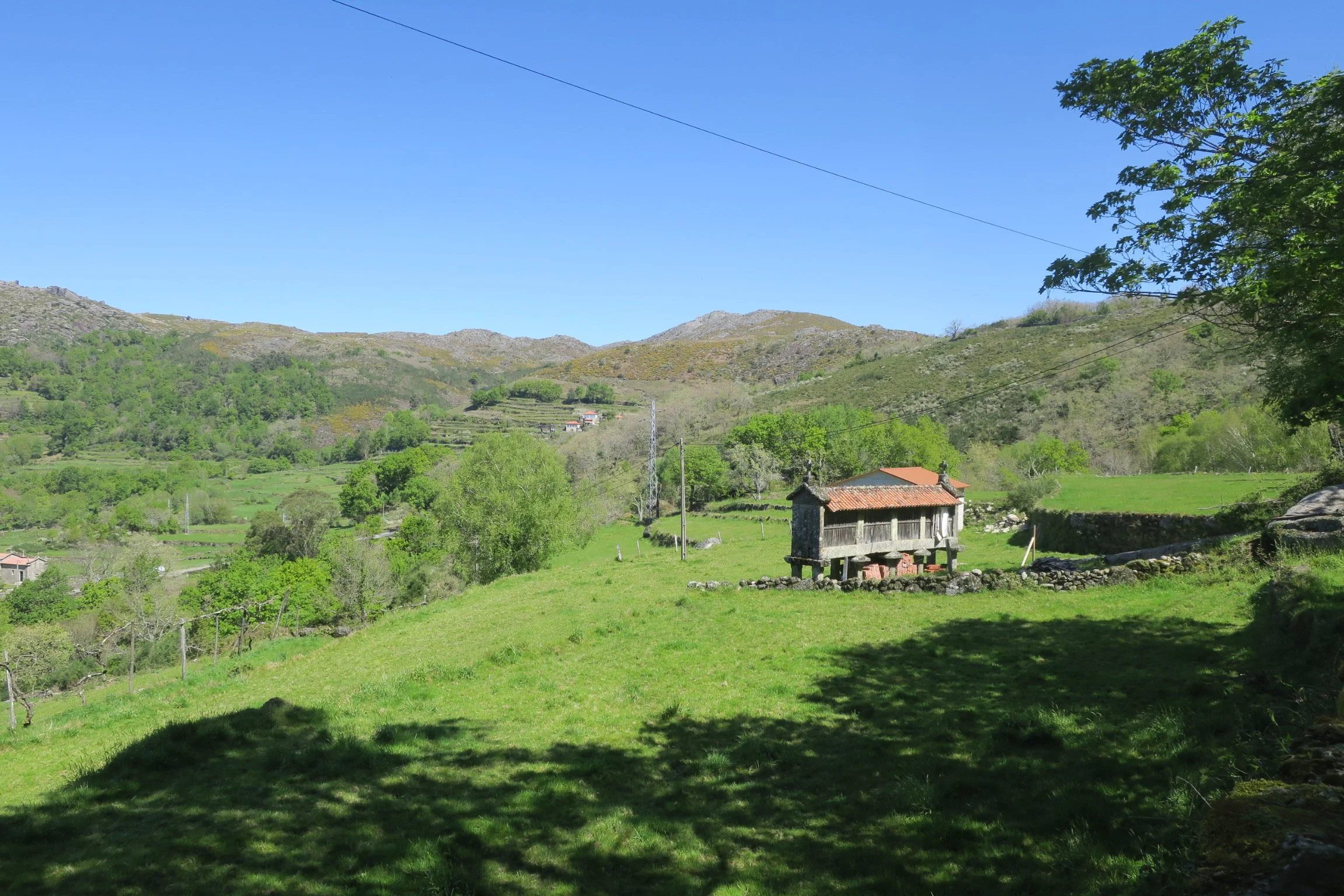
Traditional Portuguese espigueiro (granite granary on stilts)
This six-day cycling route travels through the rugged mountain landscapes of the Peneda-Gerês National Park in northern Portugal and the Xurés Natural Park in Galicia, Spain. It’s a region many visitors never see and, after spending time cycling here, it quickly became one of my favourite places to ride in northern Portugal.
Together these protected areas make up the Gerês-Xurés Cross-Border Biosphere Reserve, a UNESCO-designated mountainous region shared by Portugal and Spain.
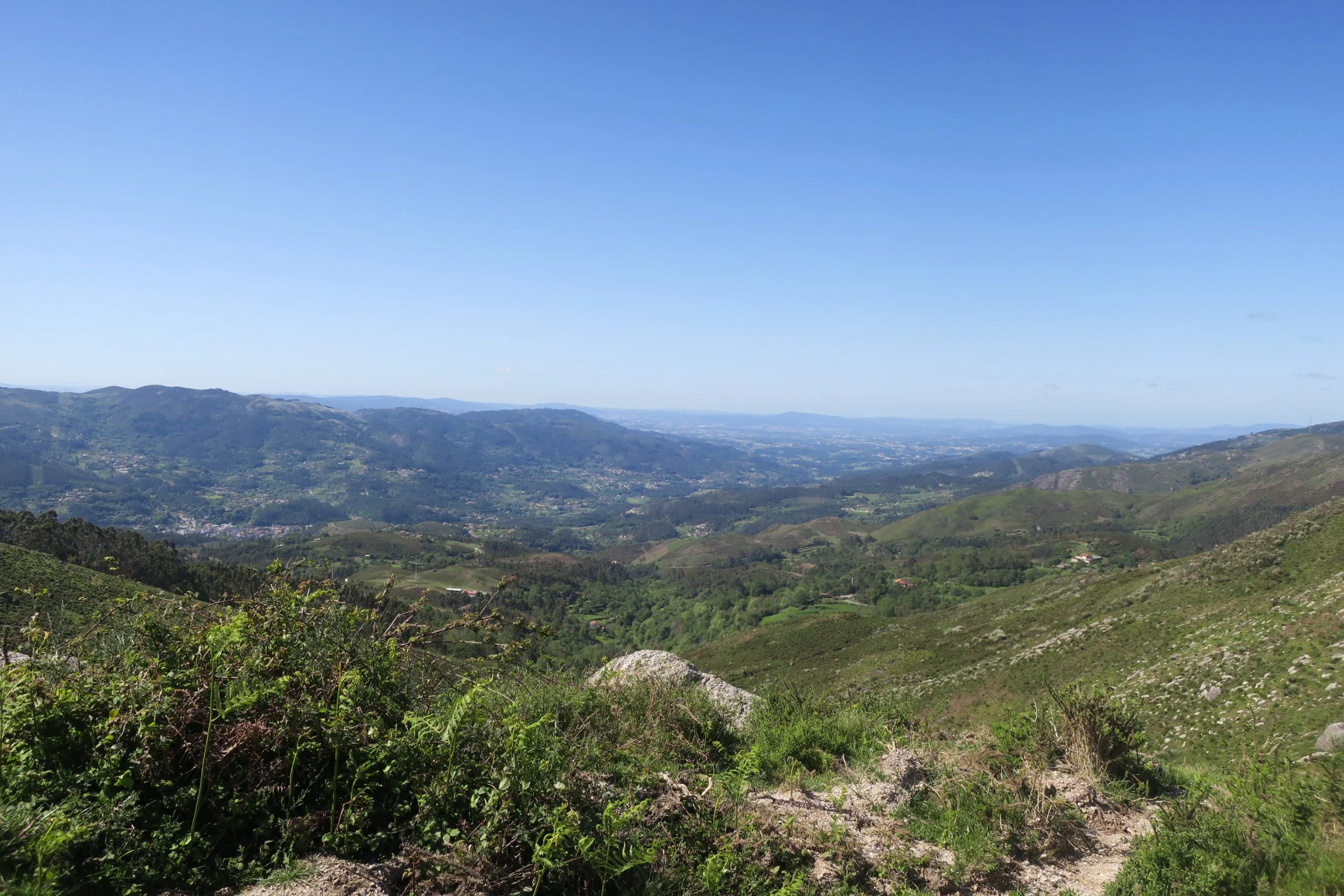
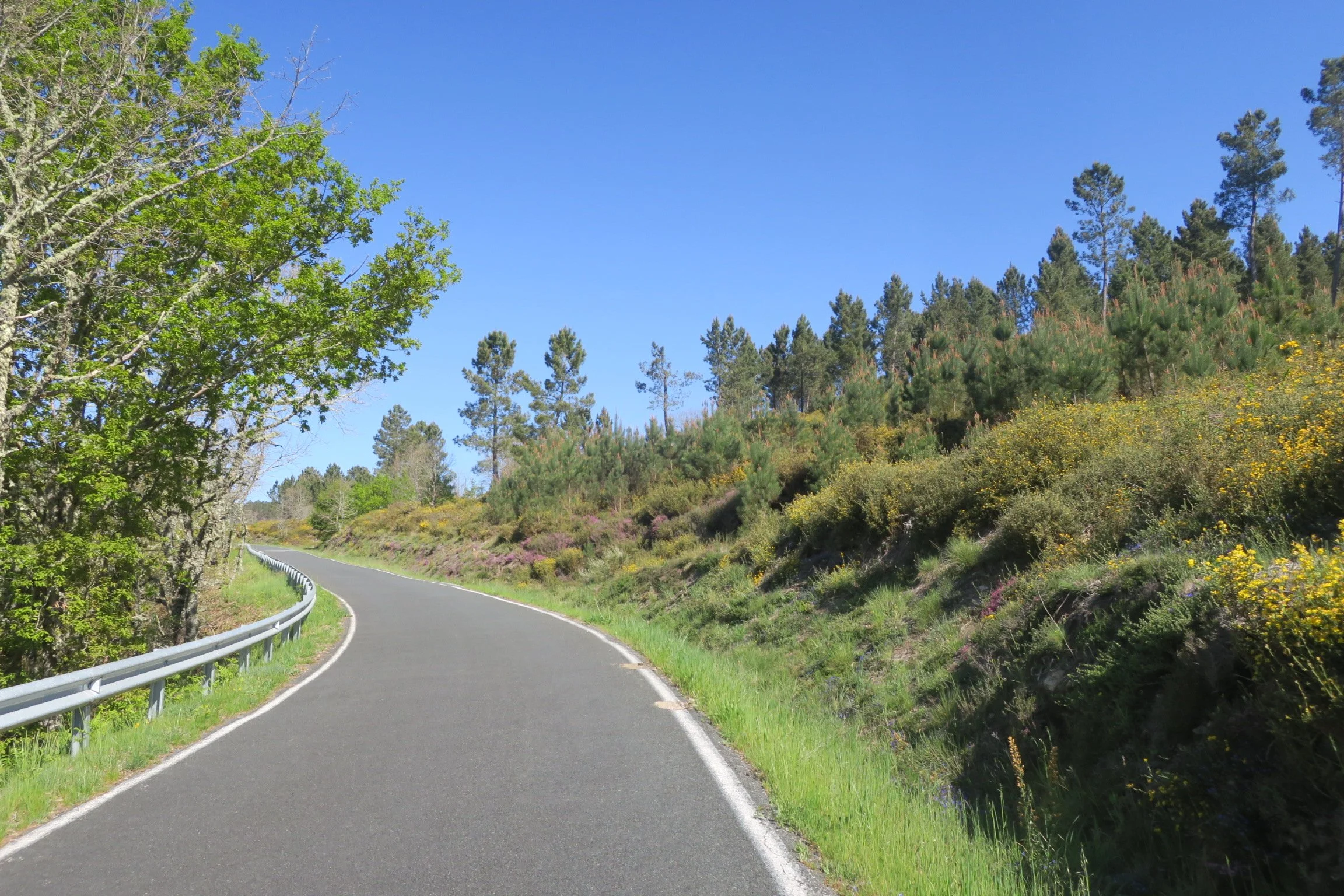
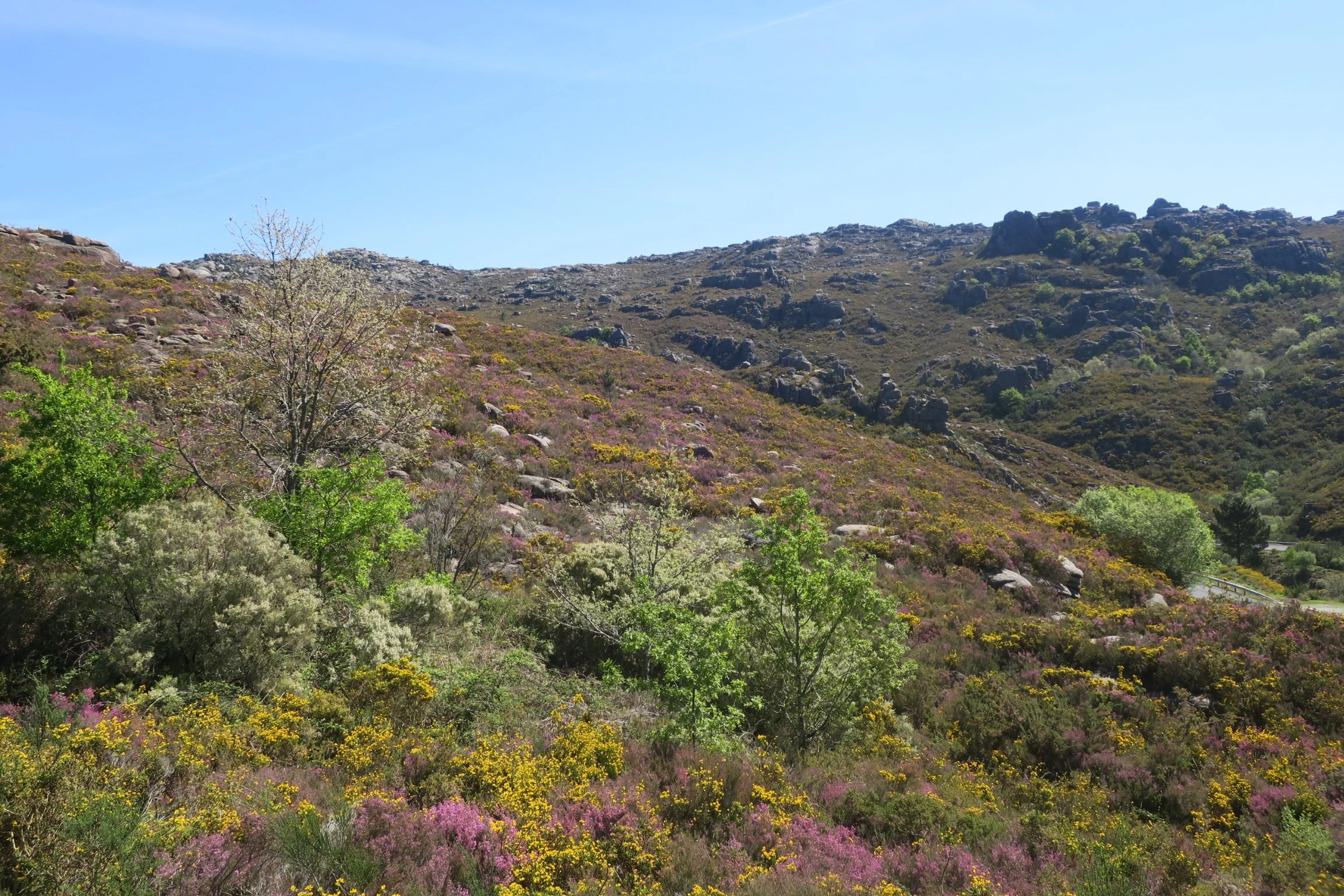
Starting in Ponte de Lima, the route wound along quiet mountain roads between villages, before finishing beside the River Minho in the fortified border town of Valença. We crossed the border four times, pedalling past granite peaks covered in pink heather and yellow broom, and discovering villages where traditional mountain life still thrives.
One of the things I loved about cycling here was just how quiet the roads were. Outside the villages, we often rode for miles without seeing a car. By the end of the week, I’d completely fallen for this region. It was a perfect multi-day cycling adventure, giving me a real taste of Portuguese and Galician mountain life.
Cycling route overview: Peneda-Gerês and Xurés
Region: Peneda-Gerês National Park (Portugal) and Xurés Natural Park (Spain) in the Gerês-Xurés Cross-Border Biosphere Reserve
Start: Ponte de Lima, Portugal
Finish: Valença, Portugal (on the Spanish border)
Duration: 6 cycling days
Distance: Approximately 218 km (135 miles)
Elevation gain: Approximately 4,300 m (highest point 1,000 m)
Terrain: Peaceful rural roads and gravel tracks through mountain scenery
Difficulty: Moderate with an e-bike. The route includes several long climbs which will feel more challenging on a standard bike
Highlights: Roman roads, mountain villages, natural thermal springs, border hopping, national park landscapes, incredible views
Six-day cycling route
Over six days, we rode through remote mountains and hidden villages, crossed the border several times, and soaked up the quiet, wild beauty of the Peneda-Gerês and Xurés.
Day 1: Circular ride around Ponte de Lima
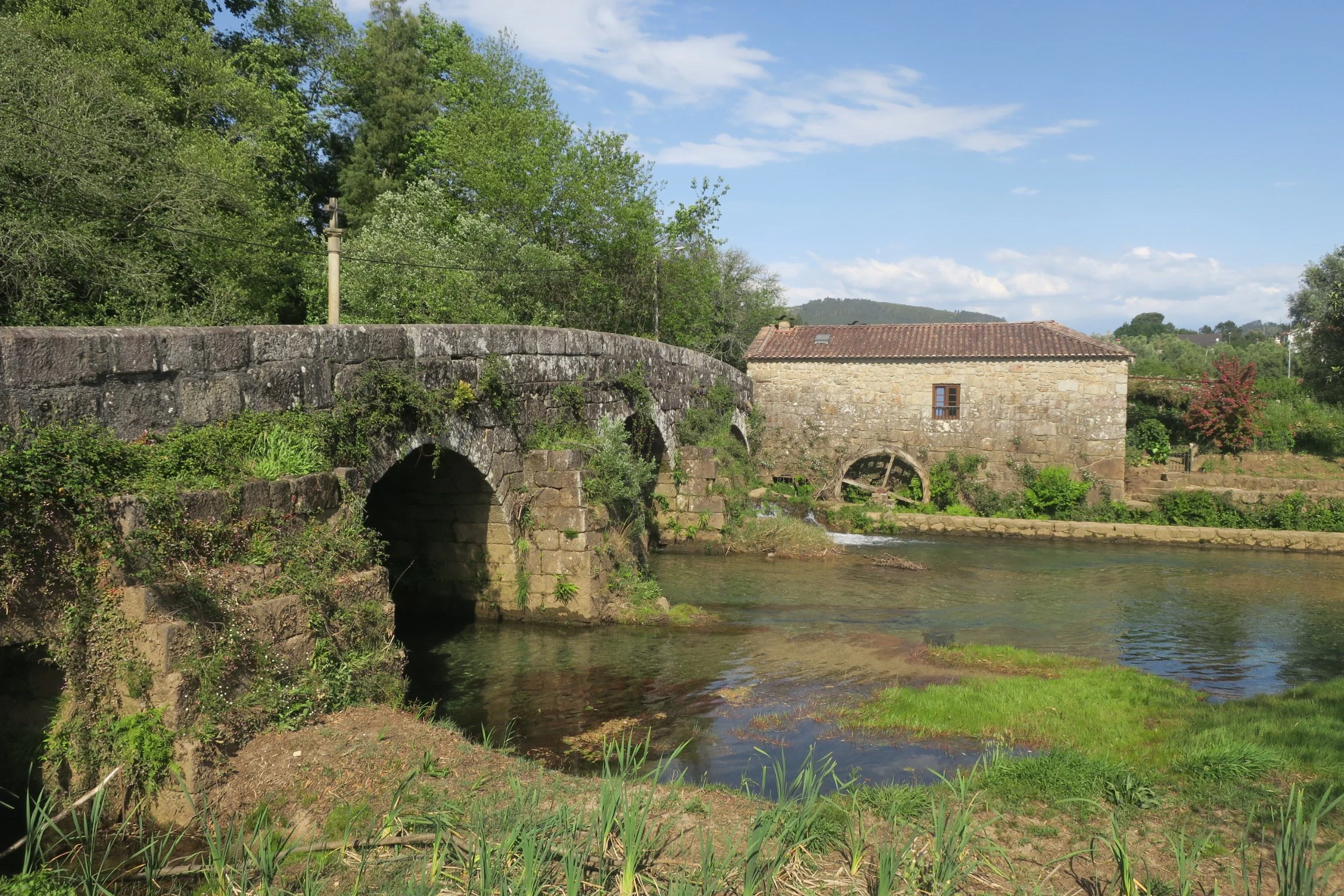
Located in northwestern Portugal, Ponte de Lima is said to be the country’s oldest town. Its name comes from the bridge that’s spanned the River Lima since Roman times, linking Braga to Santiago de Compostela - a route I explored on my Braga to Santiago cycling trip.
We began our ride by crossing the bridge and following a riverside path along the Lima. Near the bridge stands a statue of a Roman general on one side of the river, with his soldiers on the opposite bank. According to local legend, the soldiers believed the river to be the Lethe and feared crossing it would make them lose their memories. The general proved them wrong, crossing first and calling each soldier by name.
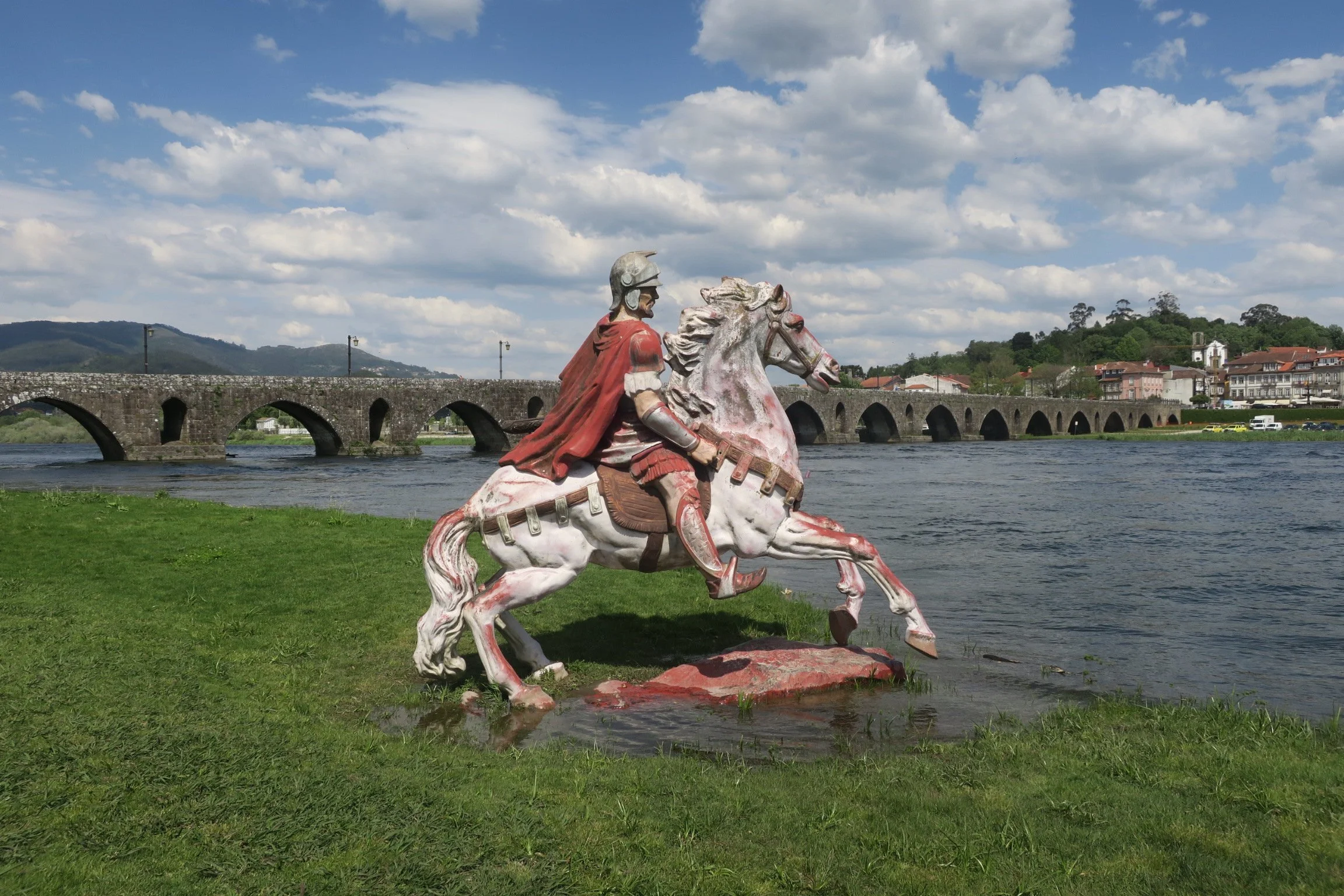
Legendary Roman general watching over the River Lima
Leaving the riverbank, we headed inland through the Lagoas de Bertiandos, a protected landscape of lakes, woodland, and farmland. It was wonderful pedalling in the dappled shade, alongside crystal clear streams with birdsong as our companion.
The return leg to Ponte de Lima followed quiet roads, through farmland, vineyards, and small villages. It was a gentle first day and left us eager for more.
Day 2: Sto António de Mixões to Lobios
The next morning, a short transfer took us higher into the Peneda-Gerês mountains. Our ride began at 728m in the tiny hamlet of Sto António de Mixões, famous for its annual Blessing of the Animals. The village square was quiet that morning, but I could easily imagine it filled with the bustle of livestock and families.
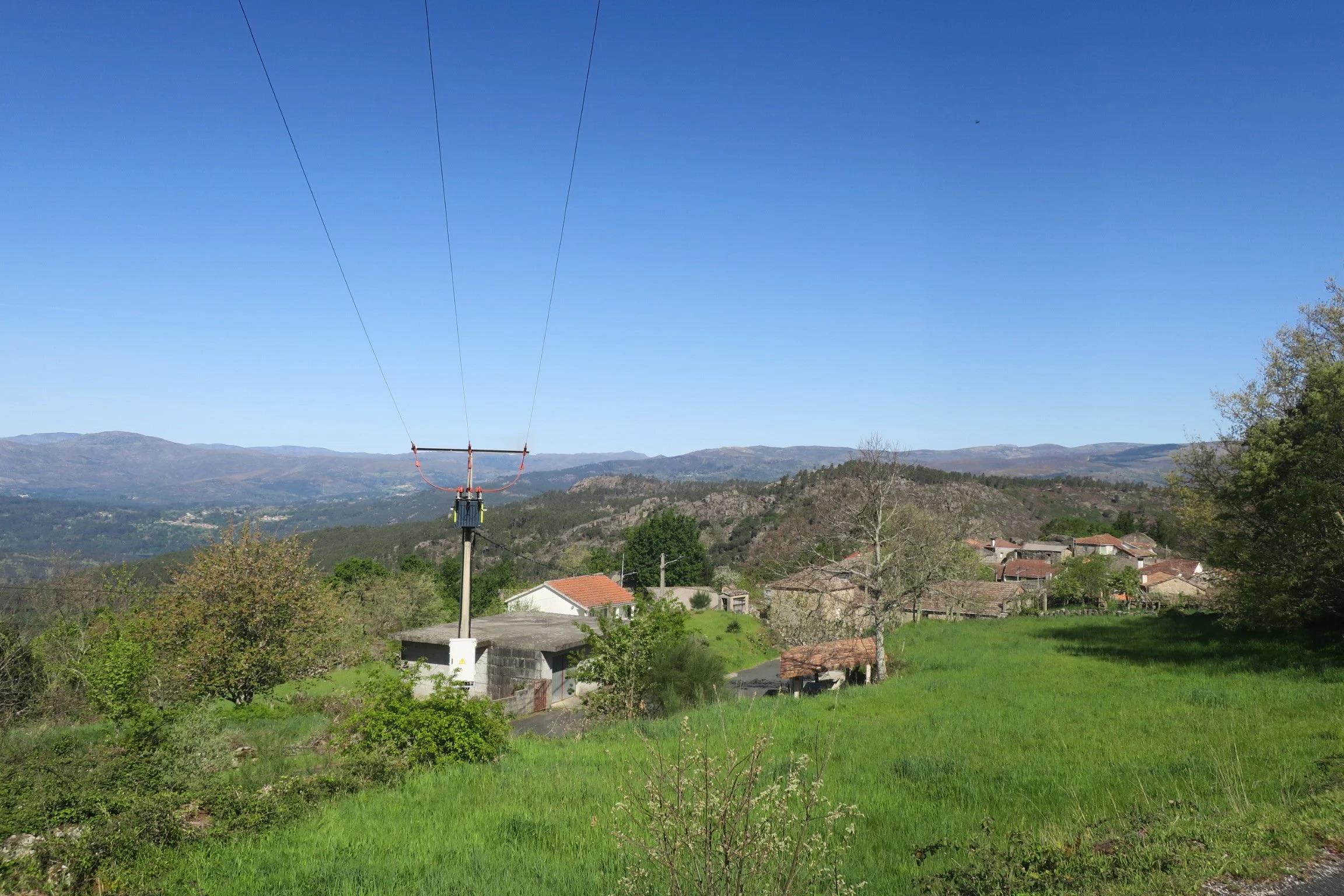
We pedalled along smooth, empty tarmac roads, winding through mountain villages and enjoying wide views across the hills. The fields were dotted with Espigueiros, traditional granaries raised off the ground to dry crops and a distinctive feature of both the Minho in Portugal and Galicia in Spain.
One of the most striking views was during a long descent to the Vilarinho da Furna dam. The reservoir had flooded an entire village, and in dry years the ruins still peak above the water. Nearby Campo do Gerês has a small museum telling the story of life before the dam, and an amazing cafe where we enjoyed traditional Portuguese stew - a perfect stopping off point.
From there, we joined the Geira Roman Road, also known as Via Nova XVIII. This 2,000 year old military route once linked Braga to Astorga. Today, it’s an off-road gravel track open to vehicles - and the bumpiest (and busiest) section of our ride that day.
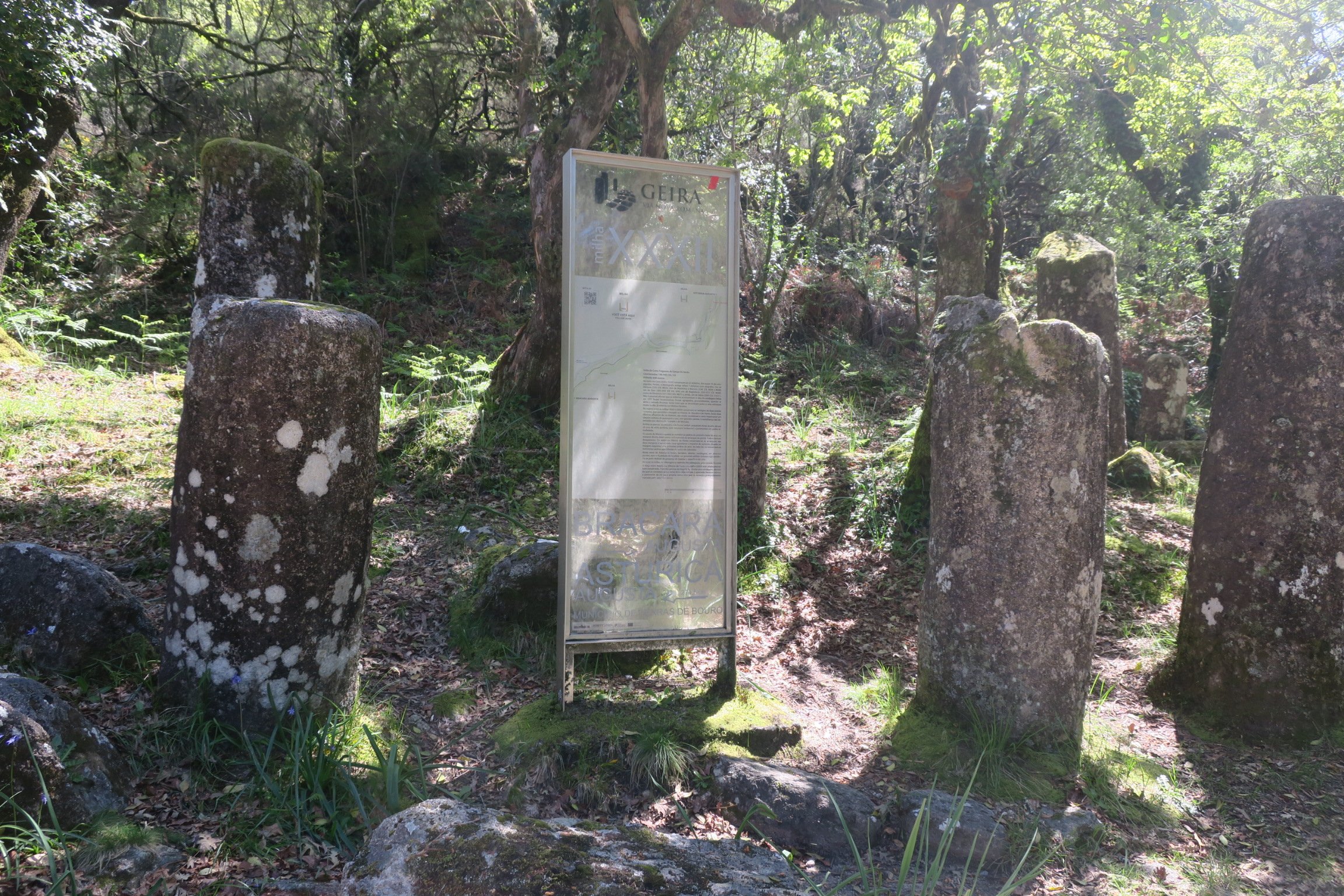
Roman milestone markers on the Geira Roman Road
Our final climb took us over the border into Spain, entering the Baixa Limia-Serra do Xurés Natural Park. From there, a long descent brought us to Lobios, where natural thermal springs offered a well-earned reward.
Day 3: Lobios to Porqueirós
Leaving Lobios, we ventured deeper into the Xurés Natural Park. The roads were narrow and winding through remote, rolling countryside. Traffic was almost non-existent on these back roads and we could probably have counted the number of vehicles we saw on one hand.
We passed traditional Galician villages like Puxedo, where murals on the walls showed scenes of rural life. A short detour led to A Cela, an interesting village where the houses are built directly into giant granite boulders. Ingenuity is strong in the mountains!
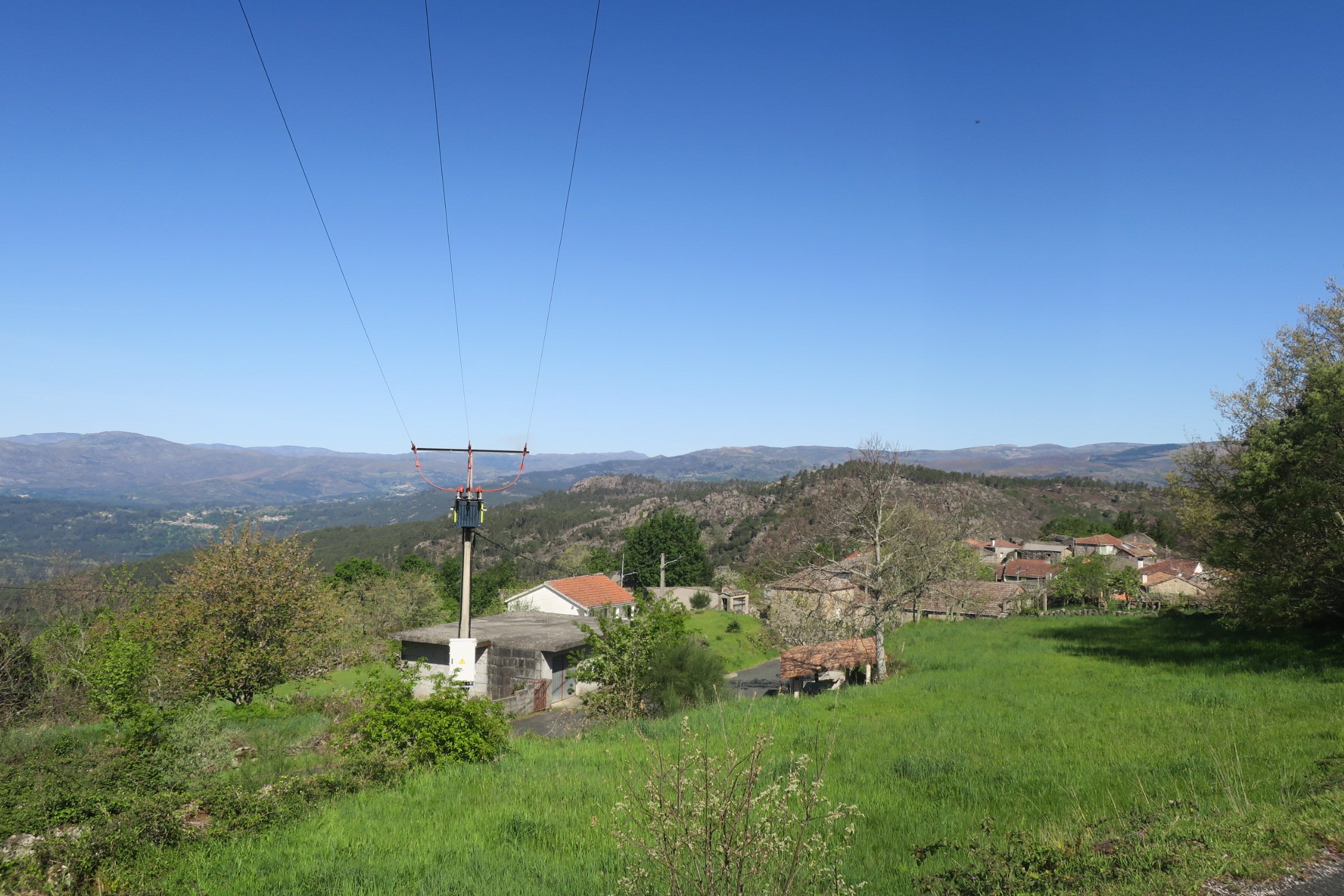
Rural village view
There were no cafes or restaurants today. It was pure countryside cycling, and the steady rhythm of turning the pedals while immersed in the mountains felt almost meditative. The Outeiro do Muiño viewpoint topped it all off as we soaked up stunning views of the Xurés mountains and River Mao.
We ended the day in the tiny, picturesque village of Porqueirós, home to two amazing restaurants and not much else. Even in such a small place, the quality of the food was a reminder that this region is full of hidden magic.
Day 4: Porqueirós loop
We started and ended the day in Porqueirós, cycling around the Salas Reservoir, nicknamed the Valley of Death because of the amount of megalithic tombs here. One even stood right beside the road.
Soon after crossing the dam wall, we came across the Foxo do Lobo do Salas, an ancient stone structure designed to protect livestock by capturing wolves. We’d seen nothing like it before and found the information board a fascinating insight into rural life in this part of Galicia.
This remote area, with traditional villages like Randin and Calvos in Spain and Tourém in Portugal, felt untouched by modern life. One of my favourite quirks was cycling through Tourém.
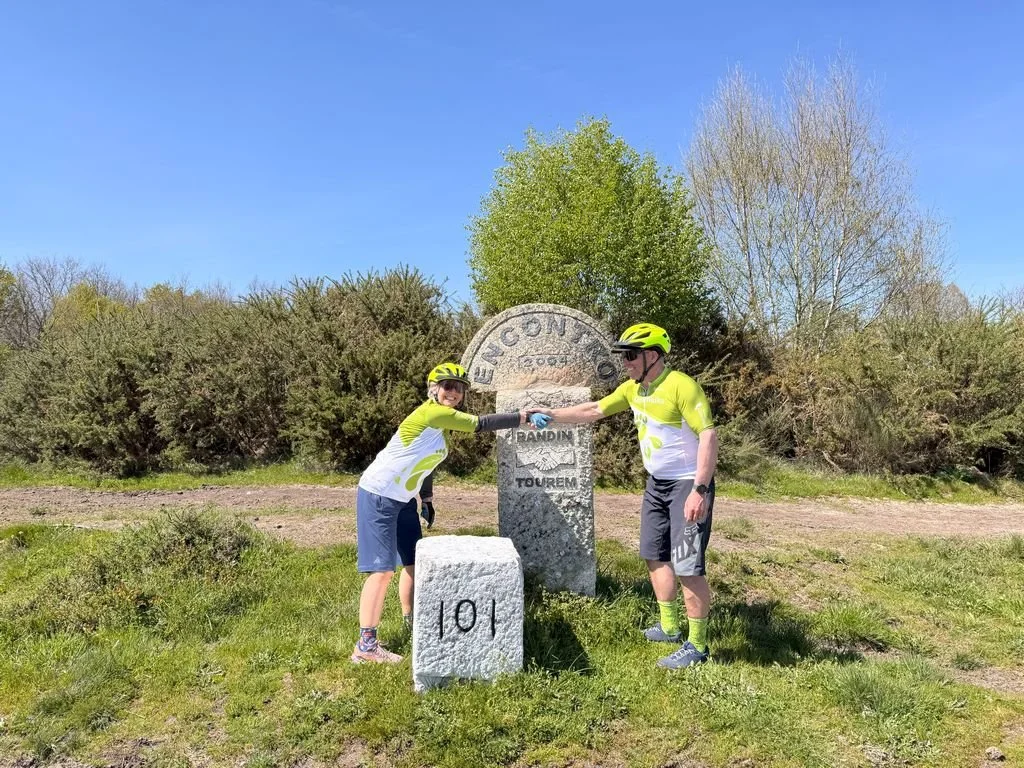
Spanish-Portuguese border crossing (© PGW, with thanks)
This Portuguese village is nestled between neighbouring Spanish villages on the same stretch of road. It meant we crossed from Spain to Portugal and back to Spain within 15 minutes. The clocks changed an hour each time, cars had different country codes, and the village had subtle differences. Looking at a map later, we noticed the U-shaped border with Tourém plonked in the middle.
For the final part of the day, we climbed gently into the hills before descending into Calvos for a well-earned drink in sunshine. Then it was back to Porqueirós for another incredible meal!
Day 5: Porqueirós to Castro Laboreiro
Leaving Spain was bittersweet. The Xurés had been absolutely stunning, but we were also excited to explore more of Portugal’s mountains and villages. The morning began with rolling countryside and wide valley views. Crossing the Lima River, we knew the rest of the day would be climbing to the high point of our trip.
The climb was a steady 16 km, but the views across the Xurés mountains made every pedal stroke worthwhile. We stopped for a quick drink in Entrimo before tackling the final kilometres. At the border, we paused one last time to take in the Xurés before crossing back into Portugal.
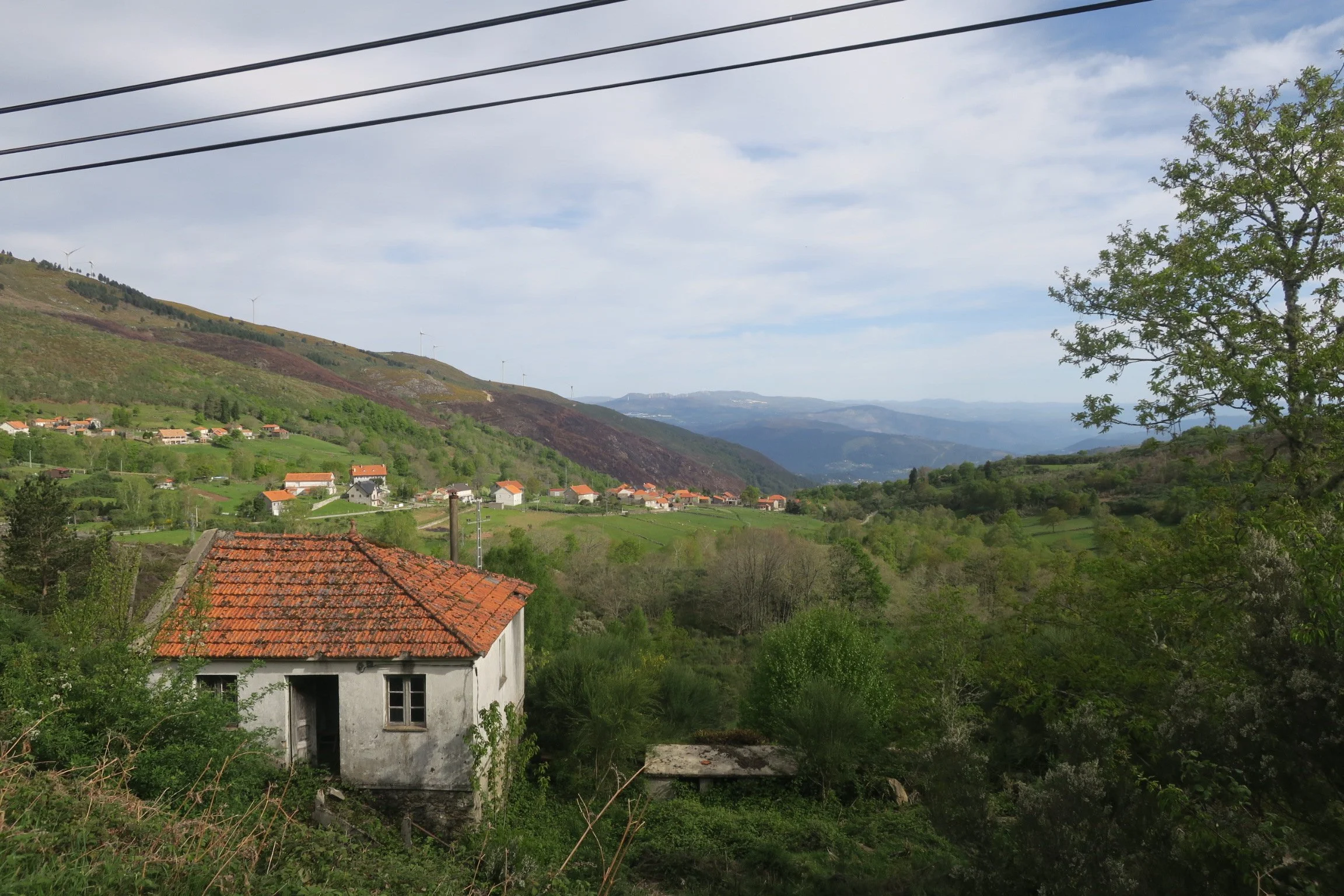
Almost immediately, the landscape seemed to change. Villages looked different, and the scenery was greener at this higher elevation. Across the valley we saw abandoned Inverneiras, the traditional winter homes of shepherds during the transhumance. In summer, they’d move families and livestock to Brandas, their summer homes on the high plateau above Castro Laboreiro.
We finished in Castro Laboreiro, a historic mountain village sitting at around 1,000 metres above sea level. I loved it here. The ruins of a medieval castle overlook the village and nearby is a sculpture of the Castro Laboreiro dog, a traditional breed once used to guard livestock from wolves. Climbing to the castle gave us breathtaking 360° views of the surrounding mountains, capturing the wild beauty of this region.
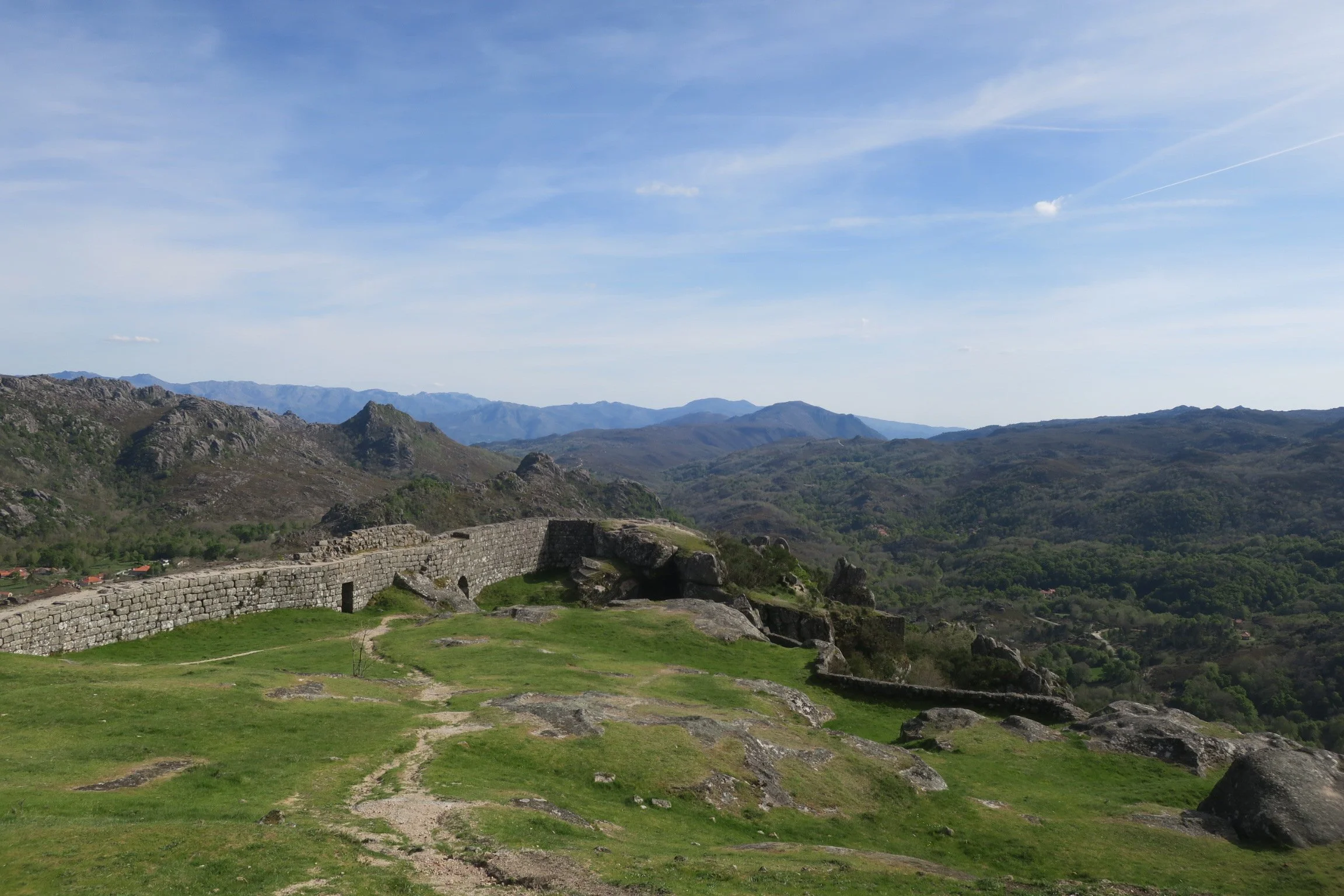
Panoramic view from Castro Laboreiro castle
Our experience in Castro Laboreiro was made even more memorable by an electricity blackout affecting the Iberian Peninsula that day. Torchlit showers and generator-powered dinners added a sense of adventure - and highlighted the benefits of staying in a remote mountain village well prepared for the winter months.
Day 6: Castro Laboreiro to Valença
Our final day began with a long descent from Castro Laboreiro, leaving the high mountains behind. Passing through Lamas do Mouro, one of the gateways to the Peneda-Gerês, we said our farewells to this incredible region.
With wide open roads and scenic views, it was hard not to stop and take it all in. As we approached the Minho valley, the landscape changed. Now out of the mountains, we were in Alvarinho wine country. Villages were closer together and the roads busier, but it still had a beauty.
Stopping in Monção for coffee, we looked over the River Minho to the Spanish border. On our way out of town, we came across statues of St George and his dragon. At first, it confused us - he’s the patron saint of England after all - but we soon learned that St George is also a patron saint of Portugal and part of Monção’s culture, with a festival held every year.
The final section followed the Ecopista do Minho, a traffic-free trail alongside the River Minho all the way to Valença. It was a gentle and scenic finale, passing villages, farmland, and vineyards.
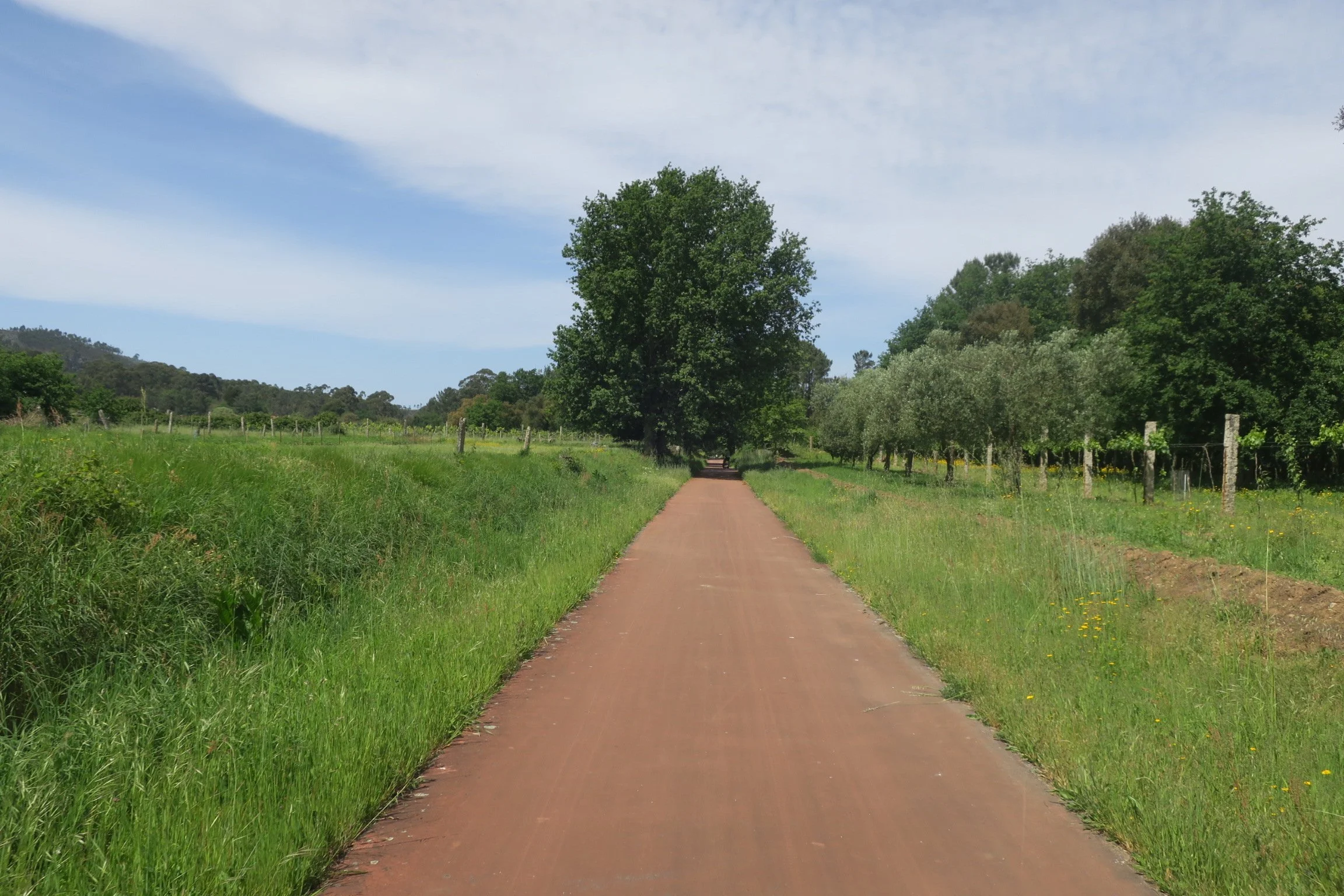
Traffic-free Ecopista do Minho
Arriving in Valença’s fortified walls, it felt a fitting end to our trip. Built in the 17th century to defend the Portuguese border, the historic centre is full of narrow streets, shops, cafes, and beautiful azulejo-tiled buildings. What a place to finish!
Looking back, this was my third cycling trip in Northern Portugal, and perhaps my favourite. Each trip has been wonderful - it’s an incredible part of the world for cycling - but the scenery, history, and way of life in the Peneda-Gerês and Xurés mountains captured my heart.
If you’re curious about doing a similar trip, there’s an Ad: enquiry form on my website and I can pass your details onto the company we travelled with.
Highlights of cycling in the Peneda-Gerês and Xurés
Cycling through the Peneda-Gerês and Xurés is a unique experience. Over six days, we enjoyed wild mountains, quiet roads, and remote villages, giving us a real taste of Iberian mountain life.
Here’s what made it stand out for me:
Mountain terrain and landscapes: high elevations (around 1,000 metres at Castro Laboreiro), granite peaks, rolling hills, and flowering pink heather and yellow broom
Border hopping: Portugal to Spain and back several times, with time changes and subtle differences in village life
Wildlife and nature: semi-wild horses, long-horned cattle, birds of prey, and even wolves
Culture and history: transhumance villages, ancient wolf traps, the Castro Laboreiro dog, Roman history (Via Nova XVIII and Ponte de Lima), and traditional stone buildings - visit rural museums in Campo do Gerês and Castro Laboreiro to learn more
Unique highlights: 13th century Castro Laboreiro castle, natural hot springs (either book at the hotel or visit the public pool area outside), and local festivals
Quiet cycling paradise: small rural roads, natural trails, and almost no traffic make it perfect for a multi-day adventure
I loved being immersed in this remote, wild region. From high granite peaks to riverside paths and traffic-free valley trails, this trip had everything I want from a cycling holiday.
If you’ve enjoyed my Braga to Santiago ride or the Douro Valley cycling holiday, this one takes you higher, wilder, and deeper into the heart of northern Portugal and Galicia.
Practical information for cycling in Peneda-Gerês and Xurés
-
The route starts in Ponte de Lima, a beautiful historic town in northwestern Portugal. It finishes in Valença’s fortified walls, on the banks of the River Minho and the border crossing with Spain.
-
We visited in April. Spring and autumn are good times to cycle. Summer can be hotter (and busier) and winter is much colder with snow sometimes at higher elevations.
-
We cycled over six days, but you can take longer and stay extra nights to explore the region.
-
Good overnight stops are Ponte de Lima, Lobios, Porqueirós, Castro Laboreiro, and Valença.
-
There are limited options in this region during the day, so it’s best to carry food and water.
-
We hired e-bikes, which made the long, steep climbs easier. Most of the route is tarmac, but the Geira Roman Road on Day 2 would be challenging on a road bike. If you’re considering a standard bike, check the terrain and elevation profiles first.
Note: This trip was part of a content writing project, but everything shared here reflects my own personal experience and honest impressions.
You may also be interested in reading:
Cycling from Braga in Portugal to Santiago de Compostela in Spain
Why Northern Portugal is Europe’s hidden gem for outdoor adventure
Double-click to edit...
Enjoyed the adventure?
If you enjoyed this post, or found something helpful, you can say thanks with a one-off cuppa (or maybe an adventure snack) here →
It’s never expected, but a big thank you if you can 🫶
Double-click to edit...
LOVE THE OUTDOORS?
Get inspiration for big trips and small adventures, straight to your inbox
Double-click to edit...
About Outdoor Girl
Outdoor Girl is run by Jacquie Budd, a UK-based outdoor writer and member of the Outdoor Writers and Photographers Guild. Alongside Outdoor Girl, she works with small businesses on websites, content, and search →
Prefer direct links?
Here are direct versions of links marked Ad above.
Cycling and walking holidays in Portugal (feel free to mention my name if you get in touch)
For more details, see my affiliate link policy, including information about Amazon Associates.